
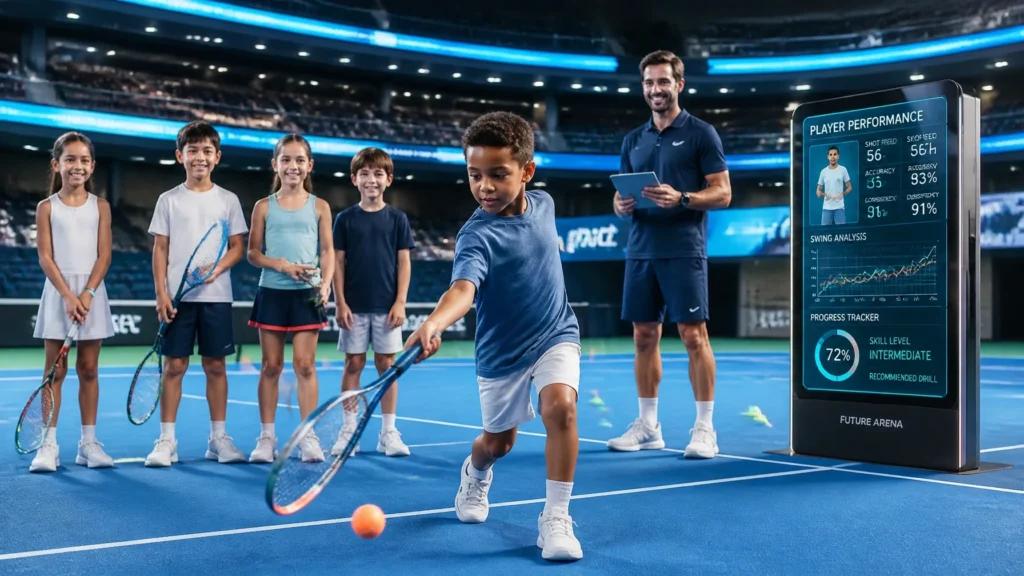
Tennis is often called a game for a lifetime, but for the modern parent, it is also a powerful gateway to STEM readiness and career infrastructure. When you introduce your child to the court, you are not just teaching them a backhand. You are immersing them in a live laboratory of physics, geometry, and data analytics. At Sports Media Inc., we believe that sports are the ultimate talent funnel for the future workforce. By framing tennis as an educational journey, you can keep the game fun while building a foundation for Fortune 100 talent readiness.
Whether your child dreams of being the next Grand Slam champion or an engineer designing the next generation of sports technology, tennis provides the discipline and analytical skills needed to succeed. This guide breaks down how to start that journey using the right tools, the right mindset, and a focus on long-term development.
Step 1: Equipment as Engineering (The Physics of the Game)
The first step in keeping tennis fun is ensuring your child has the right tools for their specific stage of development. In the world of sports product licensing, engineering the right gear is essential. For a beginner, a standard yellow tennis ball is often too fast and bounces too high, which can lead to frustration.
Instead, start with low-compression balls. These are color-coded by age and skill level: red, orange, and green. These balls are larger and slower, allowing children more time to react and process the physics of the bounce. This is a great moment to talk about force and gravity. Why does the orange ball bounce lower than the yellow one? How does the weight of the racket change the speed of the swing?
By using smaller rackets and slower balls, you create a successful environment where your child can focus on the technical mechanics. This phase is about building "STEM confidence." When they understand how the equipment works, they become more engaged with the process of improvement.

Step 2: Footwork and Biology (Physical Readiness for the Future)
Tennis is as much about the feet as it is about the hands. Developing agility and coordination is a key component of our fan experience consulting, as we look at how physical movement translates to engagement. For kids, this is the perfect time to introduce the biology of movement.
Introduce fun warm-up games like "Traffic Light" where they have to shuffle, sprint, and stop on command. These drills build the fast-twitch muscle fibers and cardiovascular endurance needed for high-level athletics. Explain to them how their heart rate increases during a rally and why oxygen is important for their muscles. This biological awareness is the first step toward a broader understanding of sports science and health-focused career paths.
Focus on fundamental movement patterns rather than perfect strokes. Can they balance on one leg while bouncing a ball? Can they side-shuffle from the center mark to the alley? These skills are the building blocks for any physical infrastructure, whether it is on a tennis court or in a professional workforce setting that requires high coordination and focus.
Step 3: Math on the Court (Geometry and Strategy)
The tennis court is a giant grid, making it the perfect place to teach geometry. Every shot is a lesson in angles and trajectories. To keep it fun, turn the court into a target zone. Use cones or hoops to create "scoring areas."
Teaching your child to aim cross-court versus down-the-line is a lesson in distance and probability. A cross-court shot travels over the lowest part of the net and into the longest part of the court, meaning it has a higher probability of success. A down-the-line shot is shorter and riskier. By discussing these strategies, you are introducing them to data analytics and strategic decision-making.
Ask your child to predict where the ball will land based on the angle of their racket. Have them count how many times they can hit a target out of ten attempts. This simple tallying introduces the concept of percentages and performance tracking, which are critical skills in the modern corporate world.
Step 4: Digital Literacy and Data (Connecting Tennis to Esports Pods)
In today's world, the line between physical sports and digital engagement is blurring. At Sports Media Inc., we utilize Esports Pods as education infrastructure to bridge this gap. You can apply this same logic to tennis by incorporating technology into their practice.
Use a smartphone or tablet to film your child’s swing in slow motion. Let them analyze their own form. This is not just about correction; it is about digital literacy. When a child sees their own data or video, they begin to understand the intersection of technology and performance. This is the same analytical mindset required for high-stakes roles in tech and engineering.
Introduce them to the concept of "Sportrons" and digital displays. Show them how professional matches use Hawk-Eye technology to track ball placement. By connecting the physical act of hitting a ball to the digital data on a screen, you are preparing them for a future where sports and tech are inseparable. This approach builds a talent funnel for students who are equally comfortable on the court and in a high-tech Esports environment.

Step 5: Professional Pathways (The Workforce Pipeline)
Finally, help your child see tennis as a path to something greater. The discipline required to master a serve is the same discipline required to lead a team in a Fortune 100 company. Use tennis to discuss different career roles within the sports industry.
Are they interested in how the match is broadcast? That is a path toward media production. Do they like tracking the scores and stats? That is sports data science. At Sports Media, our youth education initiatives focus on showing kids that for every athlete on the court, there is a team of professionals behind the scenes managing the technology, the marketing, and the infrastructure.
By keeping the focus on fun and learning, you prevent burnout. The goal is to keep them in the game long enough to reap the rewards of the "implied sponsorship" effect. This is the idea that being associated with a sport builds a personal brand of reliability, health, and intelligence.
Get Your Brand in the Game
Introducing your child to tennis is an investment in their future. It builds the physical, mental, and digital skills they need to navigate a complex workforce. To help you on this journey, we have curated a special resource for parents and young athletes.
Check out our How to Learn and Play Sports YouTube Kids Playlist. This playlist features Day 6: Tennis for Kids, along with other essential sports skills. It is designed to be energetic, helpful, and perfect for the next generation of champions.
At Sports Media Inc., we are dedicated to providing the tools and infrastructure needed to reach sports fans across America. From stadium advertising to youth development, we are your partner in the game. Any Sport, Any Venue, Any Time.
Daily Hooks for the Fortune 100 Talent Funnel
-
The Court is the Classroom: Tennis isn't just a sport; it is a high-speed geometry lesson. Discover how youth sports infrastructure is the secret weapon for building the next generation of STEM-ready talent. #STEM #YouthSports #WorkforceDev
-
From Rackets to Rockets: The physics of a tennis serve is the foundation for engineering excellence. We are building the talent funnel for Fortune 100 companies by starting on the court. #Engineering #TennisKids #FutureLeaders
-
Digital Readiness via Sports: Learn how Esports Pods and digital sports analytics are transforming the way we train the future workforce. It is time to merge physical play with digital literacy. #DigitalLiteracy #EsportsPods #TalentPipeline
-
The Infrastructure of Play: Why do the biggest companies in the world look for former athletes? Because sports build the grit and analytical skills needed for global leadership. Invest in the funnel today. #Infrastructure #Leadership #SportsMarketing
-
Data on the Baseline: Every swing generates data. By teaching kids to analyze their own performance, we are creating a pipeline of data-savvy professionals ready for the high-tech challenges of tomorrow. #DataScience #YouthTennis #Fortune100