
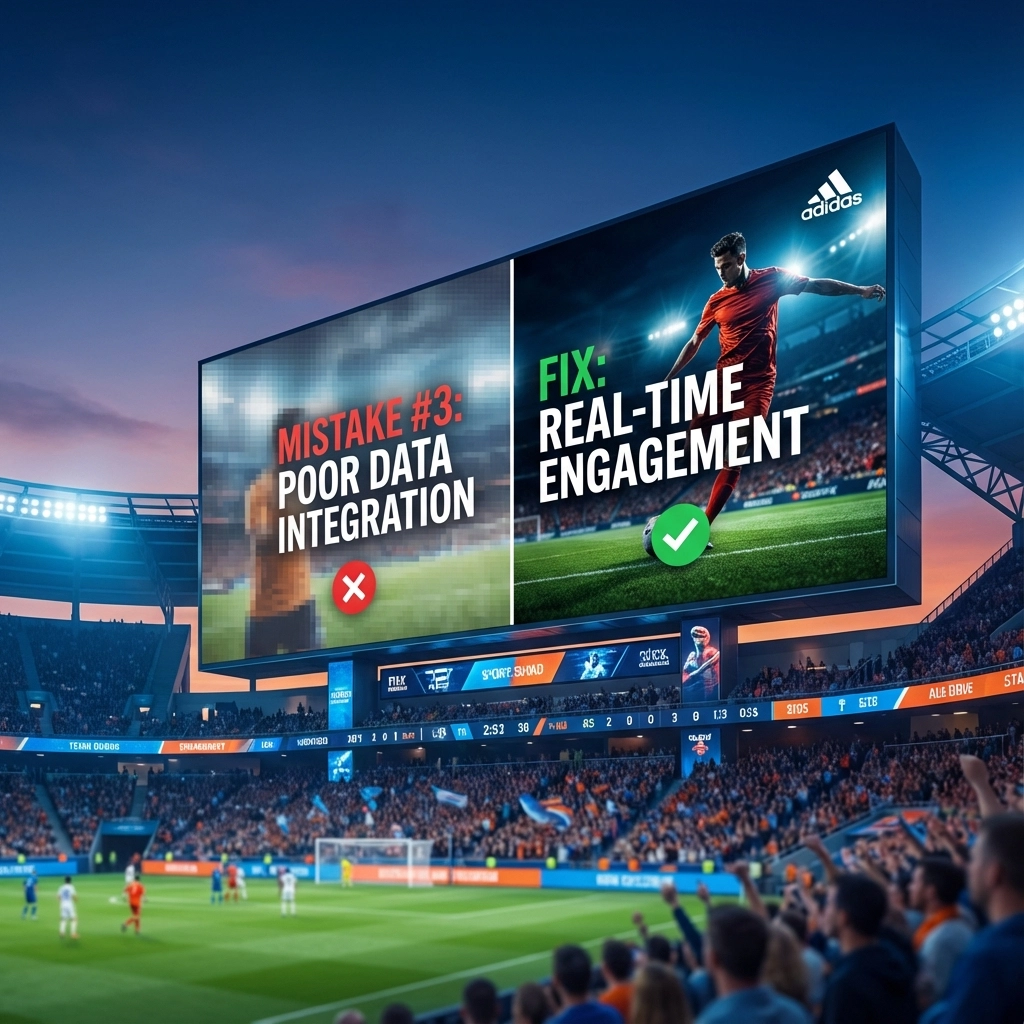
Digital out-of-home (DOOH) advertising has revolutionized how sports brands connect with fans. From massive LED displays in stadiums to interactive billboards near sports venues, DOOH offers unprecedented opportunities to capture attention when emotions run highest. But here's the kicker – most brands are leaving serious money on the table.
After analyzing hundreds of DOOH sports campaigns, we've identified seven critical mistakes that are costing advertisers big time. The good news? These mistakes are totally fixable when you know what to look for.
Mistake #1: Overlooking Brand Awareness in Favor of Direct Response
The Problem: Too many sports advertisers jump straight into promotional messaging without establishing brand presence first. You're focused on immediate conversions while ignoring the foundation that makes conversions possible.
Research shows that operators investing in brand awareness experience over 20% increased engagement and 10% superior cost-per-acquisition performance. Yet most DOOH sports campaigns skip this crucial step, diving headfirst into "Buy now!" messaging.
The Fix: Prioritize brand-building campaigns using awareness-focused DOOH placements. Think programmatic digital billboards, stadium concourse displays, and high-traffic venue locations. Build recognition first, then layer in conversion-focused messaging.
Start your DOOH strategy with 60% brand awareness content and 40% direct response. This ratio might seem backwards, but it's what separates winning campaigns from expensive mistakes.

Mistake #2: Inadequate Budget Planning for Peak Sports Seasons
The Problem: Sports marketing budgets spike dramatically during major events – we're talking 94% increases during tournaments like March Madness or the Super Bowl. Most brands fail to anticipate these costs and end up either overspending or missing critical opportunities.
Without proper forecasting, you'll find yourself scrambling for premium DOOH placements when demand (and prices) peak. Or worse, you'll blow your entire budget in the first week of a month-long tournament.
The Fix: Implement year-round forecasting tools and reserve DOOH inventory well in advance. Map out every major sporting event relevant to your audience and allocate budgets accordingly.
Create a sports calendar that includes not just major events, but local team playoffs, college tournaments, and seasonal sports transitions. Reserve premium DOOH spots during these periods at early-bird rates, then optimize spend based on real-time performance.
Mistake #3: Using One-Size-Fits-All Creative for Different Audiences
The Problem: Your DOOH creative treats all sports fans the same. Newsflash – the casual March Madness viewer has completely different motivations than the die-hard season ticket holder.
Data shows that 40% of engagement comes from new fans, 36% from active followers, and 24% from infrequent viewers. Each segment responds to different messaging, creative styles, and calls-to-action. Generic creative wastes opportunities with all three groups.
The Fix: Develop segment-specific DOOH creative that speaks directly to each audience type. New fans need education and easy entry points. Active fans want exclusive access and insider content. Infrequent viewers respond to major moments and social proof.
Use programmatic DOOH to serve different creative based on location data, time of day, and event context. A billboard near a college campus during finals week hits differently than the same message by a sports bar on game day.

Mistake #4: Ignoring Prime Time Windows and Sports Schedules
The Problem: You're running DOOH campaigns on sports marketing time, not sports fan time. Peak engagement occurs at 6 PM local time on game days, but most campaigns run on standard business schedules.
Sports fans operate on event-driven schedules. Pre-game excitement builds hours before kickoff. Halftime creates brief but intense engagement spikes. Post-game emotions drive specific behaviors. Miss these windows, and your perfectly crafted DOOH message falls flat.
The Fix: Sync your DOOH campaigns with sports schedules, not calendar schedules. Use dynamic scheduling to automatically boost spend during peak engagement windows.
Program your DOOH to serve pre-game hype content in the hours leading up to events, real-time engagement during games, and celebration or consolation messaging post-game. This requires automated tools, but the engagement lift is massive.
Mistake #5: Underestimating Local Team Loyalty and Regional Sentiment
The Problem: Your DOOH campaign completely ignores local team pride and regional rivalries. Betting activity and fan engagement spike over 70% when local teams are competing, yet most national campaigns treat every market identically.
A generic "Go Team!" message in Boston during Patriots season lands completely differently than the same message in Denver. Local sentiment drives purchasing decisions, especially during playoff runs and rivalry games.
The Fix: Use geo-targeted DOOH with locally relevant creative and messaging. Deploy dynamic creative optimization to automatically update campaigns with team-specific content based on location and current events.
Create market-specific creative libraries that reference local teams, rivalries, and cultural touchpoints. When the home team makes a playoff run, your DOOH should celebrate with the community. This authenticity drives both engagement and conversions.

Mistake #6: Running Static Campaigns During Dynamic Sports Events
The Problem: Sports events are inherently dynamic – scores change, underdogs surprise, and momentum shifts by the minute. Yet most DOOH campaigns run the same creative from start to finish, missing opportunities to ride the wave of real-time excitement.
Static campaigns can't capitalize on unexpected moments that drive viral engagement. When the underdog team scores an upset victory, generic DOOH messaging feels tone-deaf and disconnected.
The Fix: Implement real-time creative optimization that adjusts messaging based on live event developments. Use automated rules to shift creative based on game outcomes, score differentials, and trending moments.
Set up trigger-based campaigns that activate when specific events occur – overtime games, upset victories, record-breaking performances, or controversial calls. These moments create heightened emotional states perfect for brand messaging.
Mistake #7: Poor Location Selection That Misses Your Actual Audience
The Problem: You're placing DOOH ads based on general traffic data instead of actual sports fan behavior. A billboard with 50,000 daily impressions means nothing if those viewers aren't your target audience.
Sports fans cluster in predictable locations – near venues, sports bars, team stores, and transit routes to stadiums. But many DOOH campaigns prioritize general high-traffic areas over sports-relevant locations.
The Fix: Use location intelligence to identify where your target audience actually spends time. Layer sports venue data, team merchandise locations, and fan gathering spots over traditional traffic metrics.
Consider viewing context and dwell time, not just impression volume. A DOOH placement with 10,000 highly relevant sports fan impressions outperforms 50,000 generic impressions every time.

Maximizing Your DOOH Sports Advertising ROI
The sports advertising landscape moves fast, but these mistakes are slowing you down. By addressing brand awareness first, planning for peak seasons, segmenting your creative, timing your campaigns properly, embracing local relevance, staying dynamic, and choosing strategic locations, you'll see dramatic improvements in both engagement and conversions.
DOOH effectiveness in sports marketing is highly measurable through mobile location data, impression-based analytics, and brand lift studies. This means you can track exactly which fixes deliver the biggest impact for your campaigns.
Ready to stop making these costly mistakes? Sports Media Inc. specializes in strategic DOOH placements that connect brands with passionate sports audiences at the moments that matter most.
The game is changing. Make sure your DOOH strategy keeps up.