
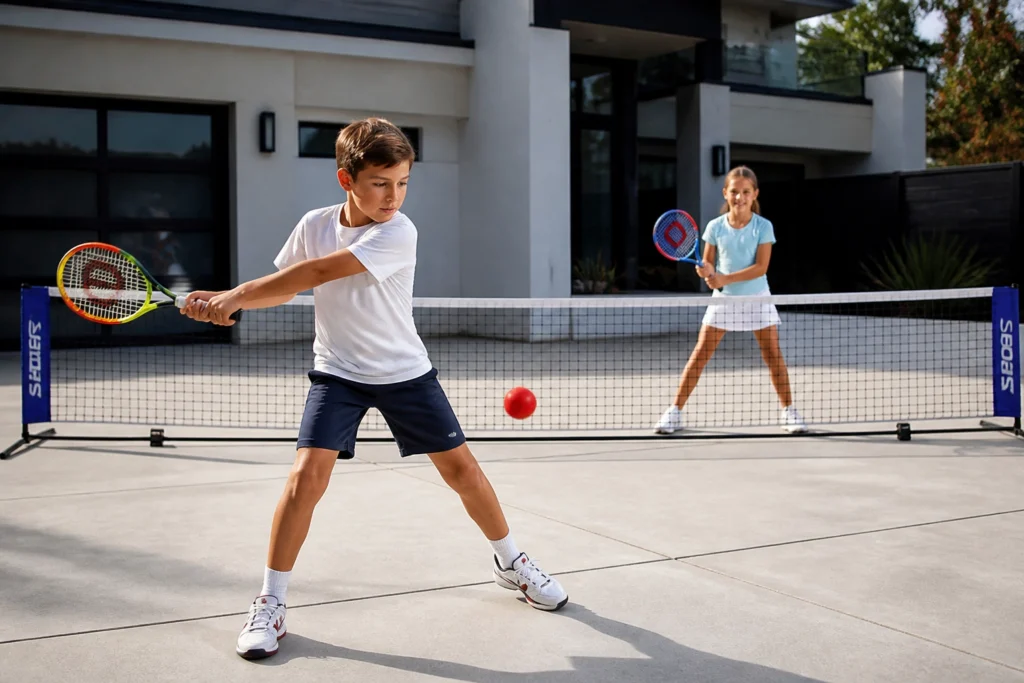
Tennis is often called a game of life, and for good reason. It is a sport that requires strategic thinking, physical resilience, and a deep understanding of physics. As a parent, you might see a tennis racket and a ball as a way to keep your kids active during a Saturday afternoon. At Sports Media Inc., we see it as something much more significant. We see it as the beginning of a Fortune 100 talent funnel. By introducing your children to the fundamentals of tennis at home, you are not just teaching them a sport. You are building the cognitive and physical infrastructure they need to succeed in a high performance technical workforce.
This guide is Day 6 of our series focusing on the Sports Media "How to learn and play Sports" YouTube Kids playlist. If you missed our previous sessions on everything from skiing safety to football fundamentals, you can catch up on our YouTube Kids playlist here. Today, we are diving into the world of tennis and how you can master the basics right in your own driveway or backyard.
The Infrastructure of Learning: Setting the Stage for Success
Before your child can hit a perfect backhand, you need to create the right environment. In the world of business and education, infrastructure strategy is everything. Just as we use Esports Pods as education infrastructure to prepare students for STEM careers, your home tennis setup serves as the foundational infrastructure for your child's athletic and mental development.
You do not need a professional grass court to start. A flat driveway, a quiet cul-de-sac, or even a large garage will work perfectly. The key is to have the right equipment. Using a heavy adult racket is a mistake that can lead to frustration and injury. Instead, look for a junior racket that fits your child's age and height. For kids under five, a 21 inch racket is usually best. As they grow toward their pre-teen years, you can move up to 25 or 26 inch models.
Pair these rackets with low compression balls. These are often called red, orange, or yellow balls depending on their bounce height and speed. For beginners, red foam balls are fantastic because they move slowly and bounce predictably. This gives your child the time they need to track the ball, a skill that is essential for building the hand eye coordination required in technical fields like engineering and data science.

Building the Talent Funnel: Mastering the Grip and Swing
In the corporate world, the talent funnel starts with basic skills and filters up to specialized expertise. Tennis follows a similar path. The first step is mastering the racquet and ball control. This is the "onboarding" phase of your child's tennis journey.
Start with simple dribbling drills. Have your child bounce the ball on the ground with their racket, just like a basketball. This teaches them how the racket feels when it makes contact with the ball. Once they have mastered the downward bounce, try the "up-bounce" challenge. See how many times they can keep the ball in the air by hitting it upward with the strings.
These drills might seem simple, but they are building the precursors to technical excellence. They develop fine motor skills and patience. When your child struggles to reach ten bounces and then finally hits twenty, they are learning about the iterative process of improvement. This is the same mindset we look for in our careers at Sports Media Inc., where persistence and problem solving are the keys to success.
STEM on the Court: The Physics of the Game
One of the most exciting parts of tennis is that it is a living physics lab. When you teach your child about the "contact point," you are actually teaching them about force, velocity, and angles. For a successful forehand, the ball should meet the strings slightly in front of the body.
You can explain this to your child in a way that sparks their interest in STEM. Show them how tilting the racket face up sends the ball high, while a flat face sends it forward. This is practical engineering. By experimenting with these angles, they are learning how to manipulate physical objects to achieve a specific result. This kind of STEM readiness is exactly what Fortune 100 companies are looking for in their future infrastructure leaders.
Strategic thinking is another huge part of the tennis talent funnel. Even at a basic level, tennis is about reading an opponent and making quick decisions. If you are practicing with them, move to different parts of the "court" and ask them where they should hit the ball to make it hardest for you to reach. This introduces the concept of spatial awareness and strategic positioning.

Movement and Coordination: Footwork Fundamentals
You cannot have a great game without great footwork. In the same way that a solid media planning and buying strategy requires a strong foundation of data, a great tennis player needs a strong foundation of movement.
Teach your child the "ready position." Feet should be apart, knees slightly bent, and the racket held in front with both hands. From this position, they can move in any direction. You can make this fun by setting up a mini obstacle course. Have them sidestep around cones or cushions between their hits.
This coordination is a vital part of workforce development. Physical movement and cognitive function are deeply linked. By improving their physical agility, you are also helping to sharpen their mental agility. This balance of physical and mental skill is what creates a well rounded individual ready to enter the modern workforce.
Watch, Learn, and Play: The Digital Component
We live in a digital world, and we should use that to our advantage. The Sports Media "How to learn and play Sports" YouTube Kids playlist is a perfect resource for this. Seeing other kids and professional coaches demonstrate these moves can make a world of difference. It provides a visual guide that reinforces what you are teaching at home.
You can watch the tennis basics video together before you head outside. Discuss what you saw. Ask your child which move they want to try first. This turns learning into a collaborative event. It also introduces them to the concept of using digital tools for professional development, a skill that will serve them well throughout their entire lives.
Check out the Tennis basics on our YouTube Kids Playlist here!
Closing the Gap: From Backyard Basics to Global Infrastructure
At Sports Media Inc., we are committed to bridging the gap between local sports and global brand exposure. Whether it is through stadium and arena advertising or our innovative NIL platforms, we believe in the power of sports to transform lives and communities.
When you spend twenty minutes a day practicing tennis with your child, you are participating in a grander strategy. You are contributing to a talent funnel that will eventually produce the engineers, managers, and leaders of the Fortune 100. You are using the infrastructure of your own home to foster the STEM readiness that the future demands.
So grab those rackets, find some soft balls, and get out there. Tennis is a journey, and the best time to start is today. Remember, it is not just about hitting a ball over a net. It is about building the foundation for a lifetime of success, both on and off the court.

For more tips on how to integrate sports into your child's education and development, visit our resources page. We are here to help you navigate the ever changing landscape of sports marketing, youth education, and professional development.
Daily Social Media Hooks
- Infrastructure for STEM starts on the tennis court. Discover how basic sports physics prepares the next generation for the Fortune 100 talent funnel.
- Why education infrastructure is more than just classrooms. Learn how our Esports Pods and youth tennis programs build the technical workforce of tomorrow.
- Talent funnels are built through early engagement. Tennis at home teaches the problem-solving skills required for high-stakes Fortune 100 careers.
- STEM readiness isn't just about coding. The physics of a tennis serve provides a tactile foundation for engineering and infrastructure leadership.
- Investing in sports infrastructure is investing in future talent. See how Sports Media Inc. bridges the gap between backyard basics and professional STEM excellence.