
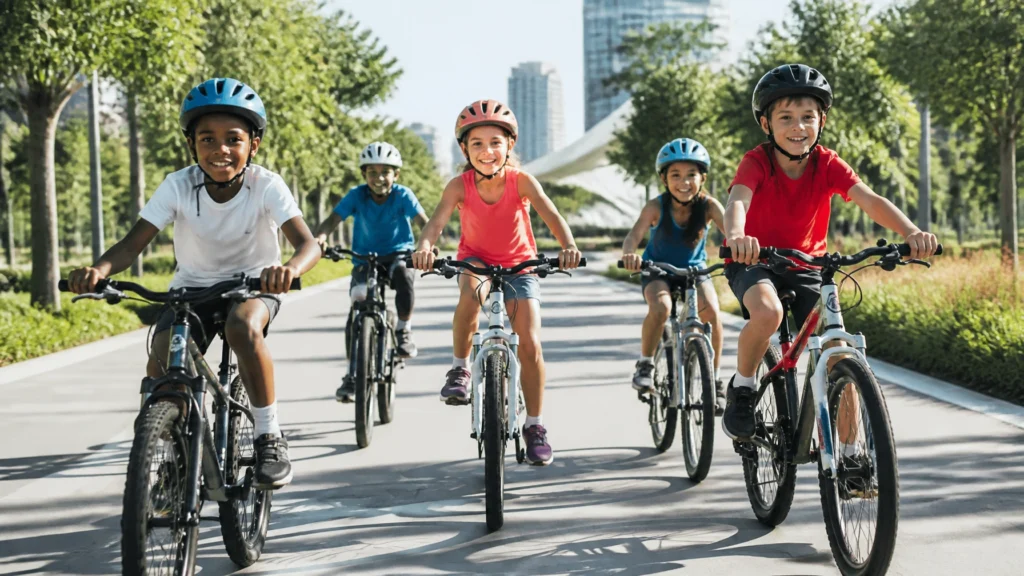
Learning to ride a bike is more than just a childhood rite of passage. It is the first major lesson in physics, engineering, and personal resilience that a child encounters. At Sports Media Inc., we believe that every sports skill learned is a brick in the wall of a child's future. Whether they are aiming for the Olympic podium or a corner office in a Fortune 100 company, the journey starts with balance, grit, and the right infrastructure.
Today, we are diving into Day 9 of our "How to Learn and Play Sports" series. We are focusing on cycling, a skill that builds the spatial awareness and coordination necessary for STEM readiness and workforce development. If you want your child to succeed on two wheels, you need to start with a solid foundation.
Before we get to the pedals, let us talk about what you need to do first.
The Foundation: Safety and Proper Fit
If you want to ensure a smooth transition to two wheels, the very first step is not the bike itself, but the safety infrastructure you put in place. Safety gear is non-negotiable. A properly fitted helmet is the most important piece of equipment your child will ever own.

To ensure the helmet is safe, follow the "Two Finger Rule." The helmet should sit level on the head, about two fingers above the eyebrows. The side straps should form a "V" shape just under the ears, and the chin strap should be snug enough that only two fingers can fit between the strap and the chin.
Beyond the helmet, consider knee and elbow pads. While they might seem like overkill, they provide the psychological "infrastructure" of confidence. When a child knows a fall won't result in a scraped knee, they are more willing to take the risks necessary to find their balance. This resilience is a key trait we look for in future leaders and innovators.
Infrastructure for Learning: Balance Bikes vs. Training Wheels
For decades, training wheels were the standard. However, the modern approach to building a talent funnel in sports focuses on "balance first." Training wheels actually teach children the wrong skill. They teach them to pedal while leaning on a crutch, but they do not teach the actual physics of staying upright.
This is where the balance bike comes in. A balance bike has no pedals. It allows the child to keep their feet on the ground and learn how to steer and balance the weight of the bike.

By mastering balance before pedaling, children often skip training wheels entirely. This method is an example of efficient infrastructure strategy. Instead of adding "temporary" fixes that need to be unlearned later, we provide the tools that build the core competency from day one. This same philosophy applies to our Esports Pods, which provide the physical and digital infrastructure for students to master complex STEM skills in a controlled, high-stakes environment.
The STEM Connection: Physics on Two Wheels
Why do we care so much about cycling in the context of a Fortune 100 talent funnel? Because cycling is a masterclass in STEM readiness. A child learning to balance is subconsciously calculating center of gravity, torque, and momentum. They are learning about friction and how different surfaces affect their speed and braking.
When we integrate sports with education, we are preparing the next generation for the workforce. We want students who can visualize problems in 3D and understand the mechanics of the world around them. Whether they are in a stadium or an Esports Pod, the goal is the same: developing a mind that is ready for the technical challenges of the future.

Building Grit for Workforce Development
Every cyclist falls. It is an inevitability of the learning process. In the world of workforce development, we call this "failing forward." A child who falls off their bike, brushes off their knees, and gets back on is developing the grit and resilience required for a high-performance career.
At Sports Media Inc., our media planning and buying experts often talk about the importance of persistence in reaching a target audience. The same applies to teaching. We aren't just teaching a kid to ride a bike. We are teaching them that obstacles are just part of the infrastructure of success.
The Quick-Start 4-Step Plan
If you are ready to get started, follow this simple four-step guide to help your child find their two-wheel success:
- The Glide Phase: If you have a pedal bike, remove the pedals. Lower the seat so your child's feet are flat on the ground. Have them "walk" the bike, then "scoot" it, and finally "glide" with their feet up.
- The Steering Lesson: While gliding, encourage them to steer around cones or markings. This builds the spatial reasoning required for more complex sports.
- The Pedal Transition: Once they can glide for 10 seconds without putting their feet down, it is time to put the pedals back on. Start on a very gentle grassy slope to give them natural momentum.
- The "Big Launch": Hold the back of their seat (not the handlebars) and have them pedal. Gradually let go as they find their rhythm.
For a visual walkthrough of these steps and more, check out our Sports Media "How to Learn and Play Sports" YouTube Kids Playlist. It is a fantastic resource for parents looking to integrate high-quality sports instruction into their child's daily routine.
Preparing for the Future
As your child masters the bike, they are doing more than just gaining mobility. They are participating in a larger strategy of STEM readiness and physical literacy. By investing in this early "infrastructure," you are setting them up for a lifetime of activity and achievement.

Whether they are navigating a bike path or a complex data set in one of our fan experience consulting programs, the balance they learn today will stay with them forever.
Don't forget to visit our YouTube Kids Playlist to see the rest of our "How to" series. From baseball basics to soccer journeys, we are here to help you get your brand and your family "in the game."
5 Daily Social Media Hooks for Fortune 100 Talent Funnel & Education Infrastructure
Hook 1: The Secret Ingredient in STEM Success
Did you know that physical sports like cycling are the first step in building a Fortune 100 talent funnel? Balance and spatial reasoning on a bike are direct precursors to engineering and STEM readiness. We are building the innovators of 2040 on the playground today.
Hook 2: Why Esports Pods are the New Classroom
Education infrastructure is evolving. Beyond the stadium, Esports Pods are providing the high-tech environments students need to master digital literacy and workforce skills. It is not just gaming. It is the future of talent development.
Hook 3: Infrastructure Strategy: From Bike Paths to Boardrooms
A child who learns to navigate a bike path with grit is a future leader who can navigate a complex corporate landscape. At Sports Media Inc., we see sports as the ultimate workforce development tool. Is your child's "infrastructure" ready for the challenge?
Hook 4: Grit is the New Metric for Workforce Readiness
You can't teach resilience in a textbook. It is learned when a child falls off a bike or loses a match and decides to try again. We are focusing on these "soft skills" to build a more robust talent funnel for the top companies in the world.
Hook 5: The Multi-Modal Learner: Sports, STEM, and Success
The modern student needs more than a desk. They need interactive kiosks, Esports Pods, and the physical mastery of sports. This multi-modal approach is how we prepare the next generation for the global workforce.