
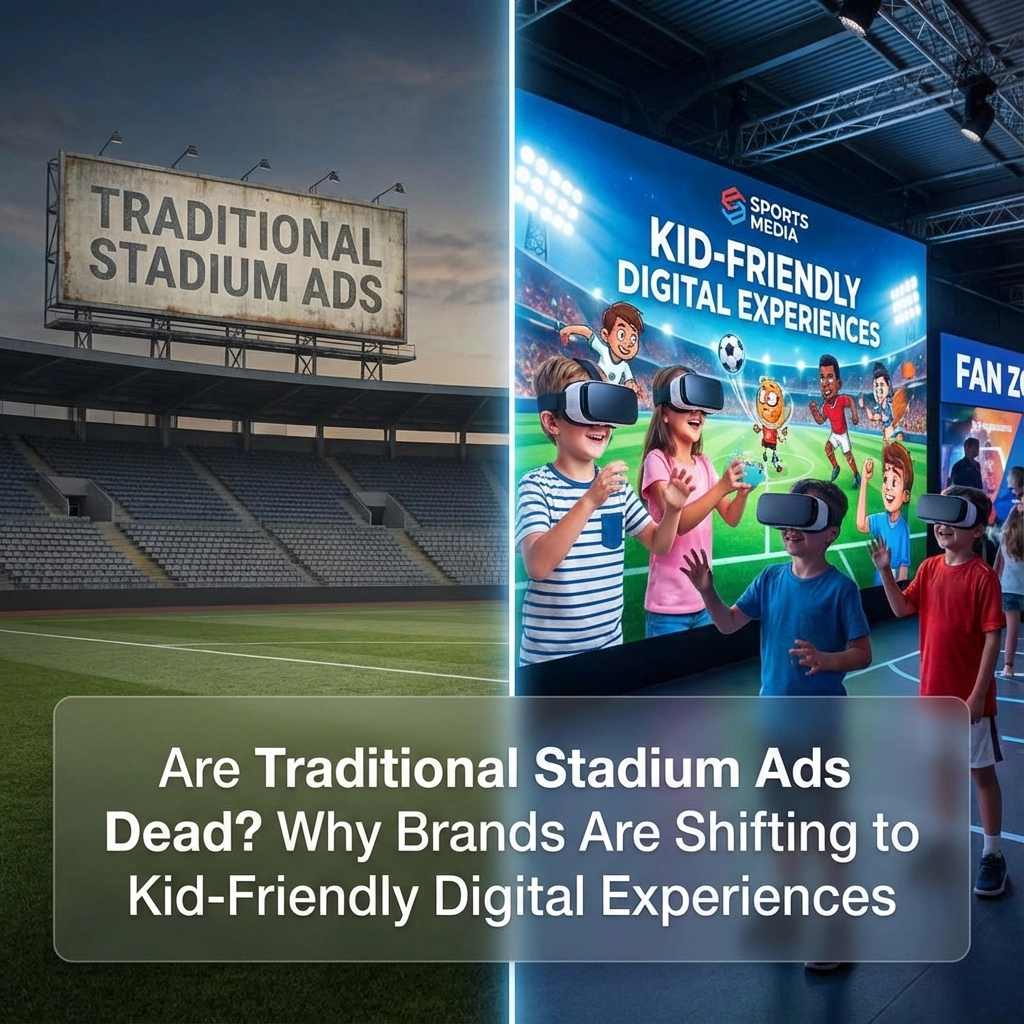
Picture this: You're at the stadium with your 5-year-old, juggling snacks, a diaper bag, and trying to explain why the team mascot isn't coming over to say hi. Meanwhile, that massive static billboard above the scoreboard is advertising luxury cars to an audience that's more interested in finding the nearest family restroom.
Welcome to the disconnect that's killing traditional stadium advertising.
The cold truth? Those giant static billboards that cost brands six figures aren't just ineffective – they're actively annoying families who make up nearly 40% of live sports attendance. But here's where it gets interesting: the smartest brands aren't abandoning stadium marketing. They're completely reimagining it.
The Death of Boring: Why Static Ads Miss the Mark with Families
Traditional stadium advertising operates on a broadcast mentality that treats every fan the same. Dad gets the same beer ad as the 4-year-old sitting next to him. The working mom juggling three kids sees the same luxury watch commercial as the college student in the nosebleeds.
Static displays cannot adapt to audience demographics or provide targeted messaging. The investment required for stadium advertising often exceeds the measurable return, particularly when compared to digital advertising options that can actually track engagement and conversions.
But the real problem runs deeper than ROI metrics. Traditional stadium ads completely ignore the reality of family attendance:
- Parents spend 60% of their stadium time managing kids, not watching ads
- Children under 7 have attention spans of 2-5 minutes maximum
- Families need practical information (restrooms, kid zones, food options) more than product pitches
- Static messaging can't respond to real-time family needs

The Digital Revolution: How Smart Stadiums Are Winning Families Back
While traditional billboards struggle, a revolution is happening on the ground level. Modern stadiums are transforming their advertising approach through digital innovation that actually serves families.
Take SoFi Stadium in Los Angeles or Allegiant Stadium in Las Vegas. These venues aren't just upgrading their screens – they're creating interactive environments that make family visits memorable. Augmented reality mascots that kids can "catch" on their parents' phones. Digital scavenger hunts that turn concourse walks into adventures. Interactive photo spots that create shareable moments.
The data backs up this shift: streaming sports advertising delivers 66% better results than traditional broadcast, and stadium digital signage generates 60% better engagement than static displays. But more importantly for family-focused brands, these digital experiences create positive associations that last well beyond game day.
Kid-Friendly Digital Experiences That Actually Work
The most successful family-targeted stadium campaigns share three characteristics: they're interactive, educational, and create shareable moments. Here's what's actually moving the needle:
Augmented Reality Mascot Interactions
Instead of hoping kids notice a static mascot image, brands are creating AR experiences where children can "meet" animated mascots through their parents' smartphones. These experiences typically last 30-60 seconds – perfect for young attention spans – and create photo opportunities that extend the brand interaction to social media.
Digital Learning Stations
Smart brands are turning concourse dead time into educational moments. Interactive displays that teach basic sports rules, player stats in kid-friendly formats, or even simple math through game scenarios. Parents love content that's both entertaining and educational.
Gamified Concession Ordering
Rather than overwhelming families with complex stadium apps, successful brands create simple games tied to food ordering. Kids can "design" their hot dog toppings or play quick matching games while parents handle the transaction.

Social-First Photo Experiences
The most viral stadium content comes from photo opportunities designed specifically for families. Think digital frames that add team graphics to family photos, or interactive backgrounds that let kids appear to "play" alongside their favorite athletes.
Why Busy Parents Are the Real Decision Makers
Here's what traditional stadium advertising misses: in family groups, parents make 87% of purchase decisions, but those decisions are heavily influenced by their children's happiness and engagement levels.
A stressed parent dealing with cranky kids isn't thinking about your luxury brand. But a parent whose 6-year-old just had an amazing mascot interaction? That's a customer who associates your brand with family joy.
This shift requires brands to think beyond the traditional advertising funnel. Instead of pushing products, successful family-focused stadium campaigns focus on creating positive experiences that build long-term brand affinity.
The numbers support this approach: 74% of viewers wish stadium ads were more relevant to their interests, and families consistently report that interactive experiences influence their likelihood to recommend both the brand and the venue to other families.
The ROI Reality: Digital Engagement vs Traditional Spend
Traditional stadium advertising operates on faith-based metrics. You pay six figures for billboard placement and hope fans notice. Digital family experiences operate on performance data.
AI-powered personalization systems deliver customized content based on real-time engagement patterns, generating conversion rates 3-5x higher than traditional broadcast advertising. More importantly for family brands, digital experiences create measurable touchpoints throughout the customer journey.

A family that engages with your AR mascot experience is 40% more likely to visit your website within 48 hours. Children who complete digital stadium activities show 60% higher brand recall after 30 days. Parents who share stadium-generated content tag your brand 23% more often than those exposed only to traditional advertising.
Strategic Shifts Smart Brands Are Making Right Now
The transition from traditional to family-focused digital stadium advertising requires fundamental strategy changes:
From Broadcast to Conversation
Instead of talking at families, winning brands create opportunities for families to engage with content. This might mean interactive displays, voice-activated information kiosks, or augmented reality experiences triggered by family photos.
From Product Push to Experience Pull
Traditional ads interrupt the stadium experience. Digital family campaigns enhance it. The most successful brands position themselves as partners in creating family memories rather than advertisers seeking attention.
From One-Size-Fits-All to Family-Specific
Smart stadium advertising now adapts content based on family composition. Families with toddlers see different messaging than those with tweens. Single parents receive different prompts than two-parent families.
Building Campaigns That Work for Real Families
Successful family-focused stadium advertising follows three principles:
Keep It Simple: Complex interactions frustrate busy parents. The best campaigns require minimal setup and deliver immediate gratification.
Make It Shareable: Parents document everything. Design experiences that naturally create photo and video opportunities.
Solve Real Problems: The most memorable brand interactions help families navigate stadium challenges – finding amenities, entertaining kids during delays, or creating special moments.

The Future Is Already Here
Traditional stadium advertising isn't completely dead, but it's rapidly becoming irrelevant for brands targeting family audiences. The stadiums investing in smart technology and family-focused digital experiences are seeing measurable increases in family attendance, concession sales, and positive sentiment.
For sports marketers, brand managers, and agencies, the writing is on the digital wall. Families want experiences, not interruptions. They want brands that understand their challenges and help create solutions.
The brands winning family loyalty aren't the ones with the biggest billboards. They're the ones creating magical moments that kids remember and parents appreciate. In a world where family time is increasingly precious, that's not just good marketing – it's smart business.
The question isn't whether traditional stadium ads are dead. It's whether your brand will lead the digital experience revolution or get left behind by competitors who understand that the future of stadium advertising is interactive, family-friendly, and built around creating memories worth sharing.