
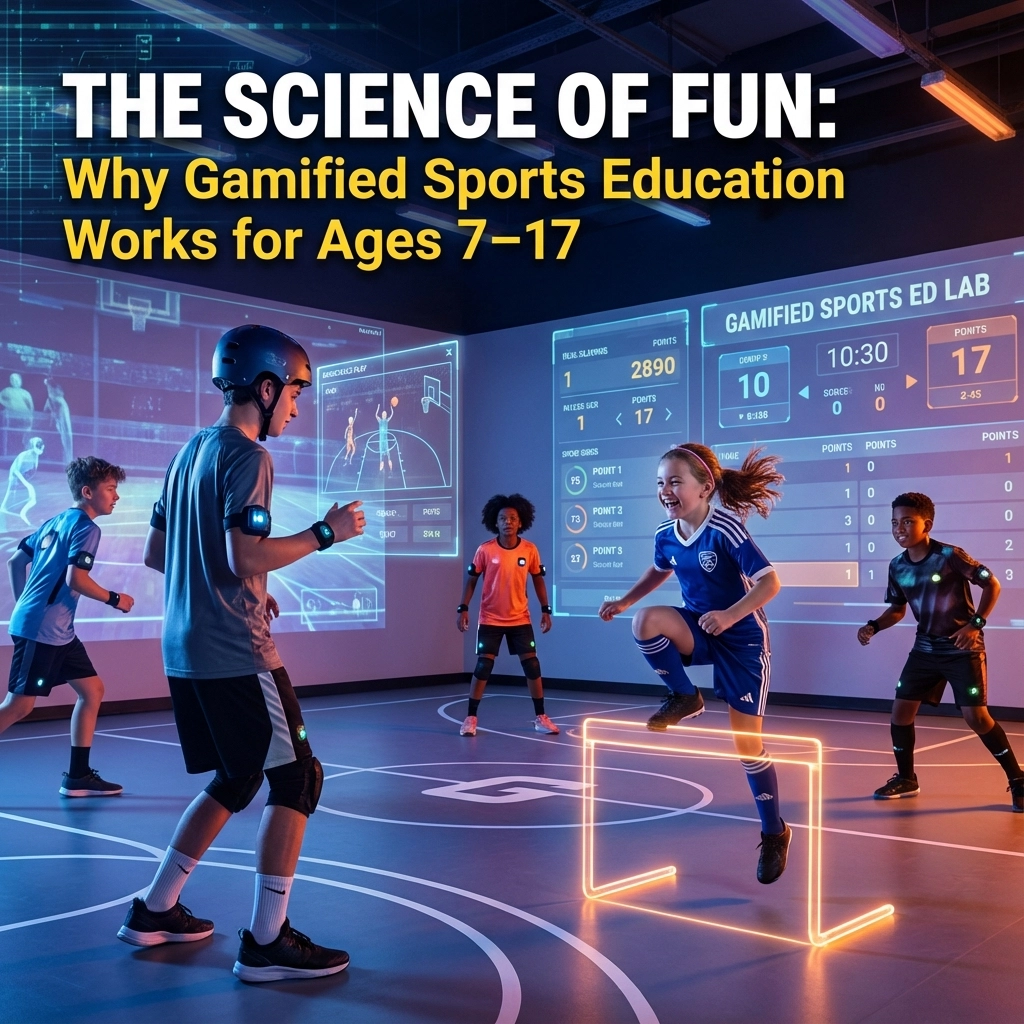
Picture this: a 10-year-old who hates traditional PE class suddenly becomes obsessed with learning basketball fundamentals because their favorite cartoon character is teaching them through an interactive game. Sound too good to be true? Welcome to the world of gamified sports education, where science meets fun to create learning experiences that actually stick.
At Sports Media Inc., we've cracked the code on why combining comics, games, and diverse cartoon sports characters creates such powerful educational outcomes for kids aged 7-17. The secret isn't magic – it's backed by solid research and psychological principles that make learning sports fundamentals feel like play.
The Psychology Behind the Power
The foundation of effective gamified sports education rests on Self-Determination Theory, a well-established psychological framework that identifies three core human needs: autonomy, competence, and relatedness. When kids feel they have control over their learning (autonomy), see themselves improving (competence), and connect with others in the process (relatedness), magic happens.
Research consistently shows that gamified physical education interventions designed around these principles produce dramatic improvements in intrinsic motivation. One major study found that students in gamified PE classes showed significant increases across all motivation categories compared to traditional instruction. The key difference? Game elements create ongoing engagement through achievement-oriented mechanics rather than relying solely on teacher direction.

Our cartoon sports character approach taps directly into these psychological needs. When kids follow diverse characters through comic book adventures, they're exercising autonomy by choosing their path through the story. As they master game challenges based on real sports fundamentals, they build genuine competence. And when they see characters who look like them succeeding in both traditional and extreme sports, they develop that crucial sense of relatedness.
Why Ages 7-17 Are the Sweet Spot
This age range represents a critical window for developing lifelong attitudes toward physical activity and learning. Between ages 7-17, kids are building the cognitive frameworks they'll use throughout their lives to approach challenges, process feedback, and stay motivated when things get tough.
The beauty of this developmental stage is that kids are still naturally drawn to play-based learning, but they're also developing the cognitive capacity to understand complex rules and strategies. A systematic review of gamified learning in physical education found that all studies reported increased student motivation after gamified intervention, with students showing significantly improved intrinsic motivation compared to those using traditional methods.
What makes this even more powerful is that the benefits aren't temporary. Meta-analytic evidence confirms that gamified sports education creates lasting behavioral and motivational changes that persist well beyond the initial intervention period. This is crucial during ages 7-17, as early experiences with sports and physical activity shape attitudes that can last a lifetime.
Real Results from Real Science
The research numbers are impressive. A meta-analysis of 16 randomized controlled trials involving 7,472 children and adolescents demonstrated that gamification interventions significantly increased moderate-to-vigorous physical activity (MVPA) and reduced body mass index (BMI). But the benefits go way beyond physical fitness.
In one four-month study, students in gamified PE classes showed dramatic improvements in 50-meter run times, flexibility, standing long jump performance, and pull-up ability compared to control groups. Even more telling, their average physical education scores were 5.08 points higher than traditional classes, proving that game-based learning translates to better academic performance in sports education.

Our approach amplifies these benefits by combining multiple learning modalities. When kids read comic book stories featuring characters mastering sports fundamentals, they're processing information through visual and narrative pathways. When they play our interactive games based on those same fundamentals, they're reinforcing learning through kinesthetic and problem-solving channels. This multi-modal approach creates deeper, more durable learning than any single method alone.
The Game Elements That Actually Work
Not all gamification is created equal. Research identifies specific game elements as particularly powerful for this age group: achievement-based and goal-oriented mechanics, especially rewards and feedback systems. These work because they provide immediate reinforcement of progress, which is developmentally perfect for kids who are still building self-assessment abilities.
Our cartoon sports character series leverages the most effective game elements:
Progressive Achievement Systems: Each character's journey through their sport creates clear progression paths with achievable milestones. Kids see exactly how far they've come and what's next.
Immediate Feedback Loops: Whether through comic storylines or interactive games, kids get instant feedback on their understanding of rules, strategies, and fundamentals.
Social Connection: Characters represent diverse backgrounds and sports, helping every kid find someone they can relate to and root for.
Real-World Application: Game challenges are directly tied to actual sports skills, so virtual achievements translate to real competence.
Beyond Physical Fitness: Cognitive and Social Benefits
The interactive nature of gamified sports education produces measurable cognitive benefits that extend far beyond the playing field. Gamification improves concentration and information retention through interactive engagement, while fostering critical thinking and problem-solving skills as kids work through game challenges.

Research shows that gamified environments promote enhanced learning experiences through increased participation, better relationships among students, greater autonomy, and improved collaboration. For ages 7-17, these social-emotional outcomes are developmentally crucial, as this period involves critical transitions in peer relationships and social competence.
Our diverse cartoon characters specifically address representation issues that can make or break a young person's connection to sports. When kids see characters who look like them, come from similar backgrounds, or face similar challenges succeeding in both traditional sports like basketball and extreme sports like skateboarding, it expands their sense of what's possible.
The Cross-Media Advantage
What sets our approach apart is the seamless integration across multiple media formats. Kids start with comic book stories that introduce characters and basic concepts, then move to animated video content that demonstrates techniques in action, and finally engage with interactive games that let them practice and master skills themselves.
This progression mirrors how kids naturally learn complex skills – from observation to guided practice to independent mastery. Each medium reinforces the others while appealing to different learning preferences and attention spans.
The comic book format is particularly powerful for this age group because it combines visual storytelling with manageable text chunks, making complex sports concepts accessible even to reluctant readers. When those same characters appear in animated shorts and interactive games, kids experience the deep satisfaction of seeing a coherent world come to life across different platforms.
Making Complex Simple
One of the biggest challenges in sports education is breaking down complex rules and strategies into digestible pieces without losing the essential complexity that makes sports interesting. Our gamified approach solves this through progressive disclosure – introducing concepts gradually through character adventures and game challenges that build on each other.

For example, instead of overwhelming kids with all the rules of football at once, our character might start with basic concepts like downs and field position in their comic book story, then demonstrate these concepts through animated sequences, and finally let kids practice applying them through game scenarios where they make strategic decisions.
The Future of Sports Learning
The research is clear: gamified sports education works because it aligns with how young brains are naturally wired to learn. By combining the motivational power of games with the narrative engagement of comics and the visual demonstration of animation, we create learning experiences that feel like entertainment but deliver serious educational value.
As we continue developing our cartoon sports character series, we're not just creating content – we're building tools that help kids develop lifelong relationships with physical activity, strategic thinking, and collaborative problem-solving. The science shows that when learning feels like play, kids don't just perform better in the moment – they develop the intrinsic motivation to keep learning and growing long after the game is over.
For parents and educators looking to inspire the next generation of athletes and active citizens, the message is clear: the most powerful learning happens when science meets fun, and games become the gateway to genuine mastery.