
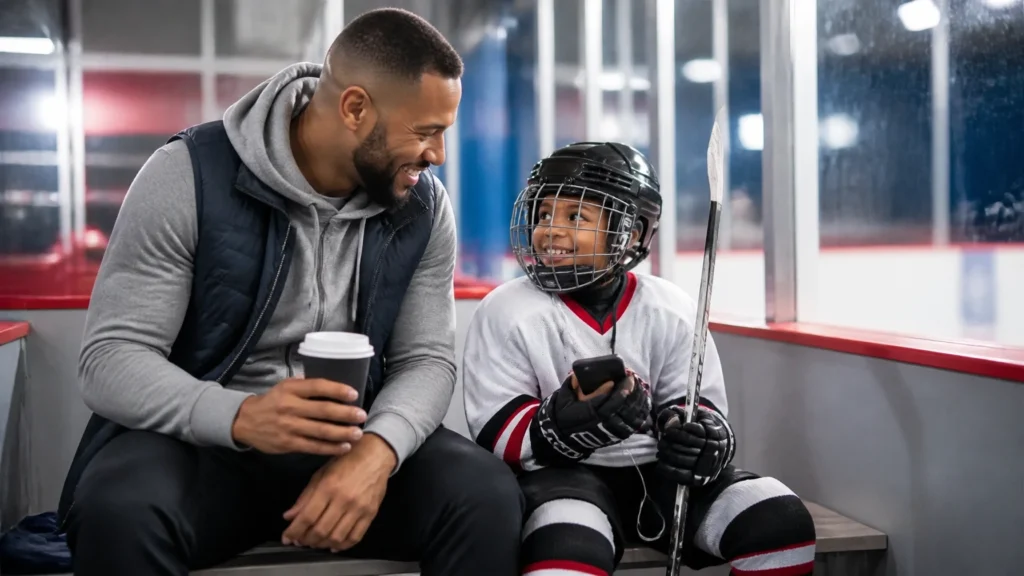
What if screen time could lead to more real-world play?
That is the idea behind a complete ice hockey for kids learning system that combines stories, sound, creativity, problem-solving, and digital play. Instead of handing children one worksheet and wishing them luck, parents can build a fun hockey pathway that helps kids understand the game before they ever step onto the ice.
This full system includes a print book, audiobook, coloring book, puzzle book, and online game. Together, these resources make youth sports education more active, approachable, and fun for beginning players.
The result? Kids can learn sports for kids in different ways, at different speeds, and with fewer “I’m bored” moments.
Why ice hockey is a great sport for kids
Ice hockey may look fast, complicated, and slightly chilly, but beginner programs break the sport into small, manageable skills.
Children learn how to:
- Balance and move safely on skates
- Hold and control a hockey stick
- Pass and shoot
- Understand basic positions
- Recognize rink markings and zones
- Practice teamwork and communication
- Handle mistakes, falls, and new challenges
Hockey also develops coordination, focus, agility, and confidence. A child who learns to stop on the ice, control a puck, or make a first pass has accomplished something tangible. That small victory can create momentum for the next challenge.
Of course, proper equipment and qualified coaching matter. Parents should look for beginner programs that emphasize safety, age-appropriate instruction, sportsmanship, and fun. USA Hockey and the International Ice Hockey Federation parent resources offer helpful guidance for families exploring youth hockey.

The complete ice hockey learning system
Every child learns differently. Some kids want a story. Others want to color, solve puzzles, listen, or play a game. The five-part system gives them all those doors into the sport.
1. Print book: Start with a story
The print book introduces hockey through friendly characters, simple explanations, and an encouraging adventure on the rink.
Let's Learn to Play Ice Hockey is designed for young readers and beginning players. It introduces concepts such as skating, stickhandling, passing, shooting, teamwork, equipment, and sportsmanship in a way that feels more like a story than a lecture.
That matters because young children often learn best when information is connected to characters and action. A book can make unfamiliar words less intimidating. “Blue line,” “faceoff,” and “penalty box” become part of a story instead of a pop quiz.
For parents, the print book is also a useful pre-practice tool. Read a few pages before heading to the rink, then ask your child to spot the same idea during practice.
“Can you show me where the blue line is?”
“Which way should the stick blade face?”
“Who helps protect the net?”
Congratulations. You are now coaching from the passenger seat.

2. Audiobook: Learn while moving
The audiobook adds another learning channel for children who enjoy listening. It is a great option for car rides, quiet time, or getting ready for practice.
Add the ice hockey audio experience and let kids hear the language of the game repeated naturally. Listening helps reinforce vocabulary and can make the sport feel more familiar before a child has to perform a new skill.
An audiobook is especially useful when a child is not ready to sit still with a book. The story can travel to the car, the locker room, or the living room. No skates required.
Parents can pause occasionally and ask simple questions:
- What does a goalie do?
- Why do players pass the puck?
- What does teamwork look like?
- What should you do if you fall?
The goal is not to turn the family vehicle into a hockey classroom. It is to make learning part of the normal rhythm of the day.
3. Coloring book: Make the game visual
Coloring turns hockey vocabulary into something children can see and touch. A coloring book can introduce equipment, players, pucks, nets, jerseys, and rink scenes while helping young learners build focus and fine-motor skills.
Explore the ice hockey activity collection for creative ways to keep the learning going away from the rink.
Coloring can also help children feel more comfortable with equipment and environments that may seem overwhelming at first. A helmet, stick, skate, or goalie mask on the page feels much less intimidating than a full locker room of gear.
Try a simple activity:
- Color the goalie’s equipment.
- Circle the puck.
- Draw a line from the player to the net.
- Name one safe behavior on the ice.
That is a tiny lesson disguised as an art project. Sneaky? Yes. Effective? Also yes.

4. Puzzle book: Practice thinking like a player
Hockey is not only about skating fast. Players must observe, anticipate, remember, and make decisions.
A puzzle book helps children practice those mental skills through:
- Mazes
- Word searches
- Matching activities
- Equipment identification
- Rink-themed challenges
- Simple hockey vocabulary
- Goal and player puzzles
Puzzle activities can reinforce concepts from the story while keeping kids engaged during travel, quiet time, or between practices.
For younger children, solving a maze can build visual tracking and persistence. For older beginners, word searches and matching games can strengthen hockey vocabulary. Either way, the child is learning without feeling like they have been assigned homework.
A good puzzle also gives kids permission to try, make a mistake, and try again. That is a valuable sports lesson before the first puck drop.
5. Online game: Move learning onto the screen
Screens are not automatically the villain. The better question is whether the screen experience is passive or interactive.
Visit SportsMedia.us to explore online sports games and digital activities. An online hockey game can help children connect ideas such as movement, timing, scoring, and decision-making in a format they already understand.
Pair digital play with real-world movement:
- Play the online game for a short session.
- Practice stick position with a foam stick or safe household substitute.
- Work on balance and stopping in an approved skating environment.
- Ask the child to explain one rule from the game.
That turns screen time into a launchpad for activity instead of a parking spot.
For more screen-friendly sports learning, families can also watch the YouTube Kids hockey and sports playlist.
A simple weekly learn-to-play routine
You do not need a professional locker room, a private coach, or three hours of free time. Try this simple routine:
Monday: Read one section of the print book.
Tuesday: Listen to the audiobook during a car ride.
Wednesday: Color a hockey scene and name the equipment.
Thursday: Complete one puzzle activity.
Friday: Play an online sports game for a limited, parent-approved time.
Weekend: Attend skating practice, visit a rink, or practice basic movement safely.
This routine blends reading, listening, creativity, problem-solving, digital interaction, and physical activity. It supports the broader goals of children's sports books, youth sports education, and healthy family participation.
Parents looking for additional education and sports engagement ideas can explore Sports Media’s youth education resources and resources library.
What should kids learn first in hockey?
For beginners, the order matters less than the experience. Start with the basics:
- Safety and proper equipment
- Balance and skating position
- Starting, stopping, and turning
- Stick control
- Passing and receiving
- Shooting
- Teamwork and simple positioning
- Rules such as offside and icing
Keep explanations short. Demonstrate whenever possible. Celebrate effort, not just goals. If your child falls, help them reset without turning the moment into a dramatic sports documentary.
The best beginner lesson is simple: hockey is challenging, but it is also supposed to be fun.
Bring youth sports education to your brand
Brands that support youth sports can become part of meaningful family experiences. A sponsorship can help fund books, activity materials, online games, community events, rink programming, or fan engagement campaigns.
Sports Media, Inc. is a full-service sports marketing agency that helps brands connect with highly engaged sports audiences through creative campaigns, sponsorships, digital media, publications, and live sports experiences.
A youth hockey education campaign can include:
- Sponsored book distribution
- Team or rink activity stations
- Branded coloring and puzzle materials
- Online game sponsorships
- Sampling and family fan experiences
- Digital content and social activation
- Community education initiatives
These programs can also support STEM education, communication skills, workforce development, and a long-term talent funnel by helping children build confidence, discipline, decision-making, and teamwork early.
Interested in putting your brand in the game? Contact Sports Media to discuss a youth sports education sponsorship.
Final whistle
Ice hockey for kids does not have to begin with a complicated rulebook or a mountain of pressure. It can begin with a story, a coloring page, a puzzle, a listening session, or a short online game.
The full learn-to-play system gives families multiple ways to introduce the sport, build confidence, and connect screen-based learning with real-world movement.
Read it. Hear it. Color it. Solve it. Play it.
Then lace up and take it to the ice.
Disclosure: Some links in this article are affiliate links. If you purchase through them, Sports Media may earn a commission at no additional cost to you.
#KidsSports #YouthSports #SportsBooks #LittlePro #SportsEducation #ParentingTips #ActiveKids