
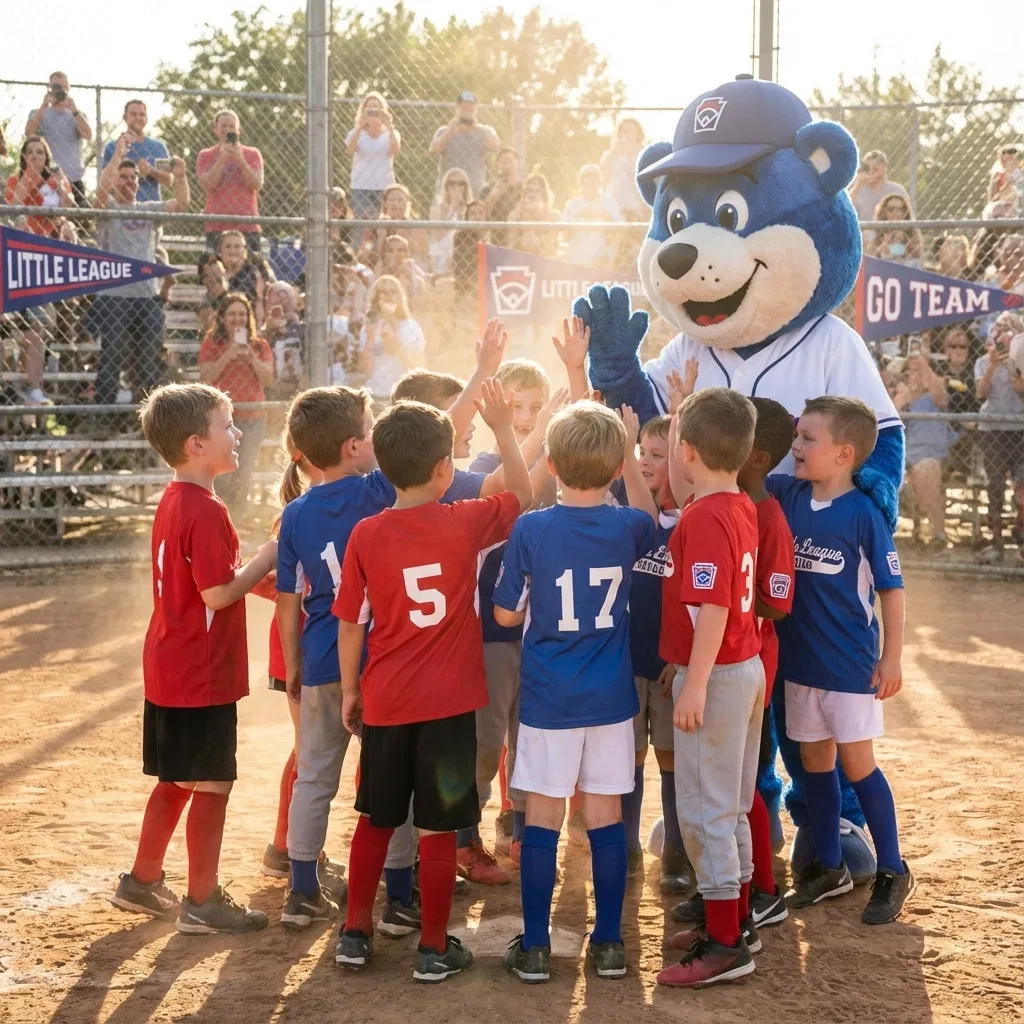
Welcome to Day 2 of our journey into youth sports mastery. Today, we are stepping onto the diamond to talk about America’s pastime: baseball. For many parents, the sound of a ball hitting a glove or the crack of a bat is the sound of childhood. But at Sports Media Inc., we see something much bigger happening on those dusty local fields. We see the early stages of a Fortune 100 talent funnel.
When your child picks up a baseball bat, they aren't just playing a game. They are entering a world of physics, geometry, and strategic thinking. They are developing the resilience and STEM readiness that Fortune 100 companies crave in their future workforce. This blog post will guide you through the fundamentals of baseball while showing you how this infrastructure of play builds the leaders of tomorrow.
The Foundation: Building a Talent Funnel Through Play
Why do we talk about baseball in the same breath as a Fortune 100 talent funnel? It is because the skills required to succeed on the field are the same skills required in a high pressure corporate environment. A player must calculate trajectories, communicate clearly under stress, and analyze data in real time.
By investing in youth sports, we are investing in education infrastructure. Whether it is a community baseball field or high tech Esports Pods for digital athletes, these environments are where STEM readiness is nurtured. Before we get into the complex strategies, we must master the basics.
Step 1: Mastering the Hitting Stance and Grip
Hitting a round ball with a round bat is one of the hardest things to do in sports. It requires incredible hand-eye coordination and a basic understanding of physics.
The Grip
Teach your little pro to hold the bat with their "door-knocking" knuckles lined up. The grip should be firm but not tight. Think of it like holding a bird: firm enough that it won't fly away, but light enough that you don't crush it. This allows for maximum wrist flexibility and bat speed, which are essential for generating force.
The Stance
Have your child stand with their feet a bit wider than their shoulders. Their knees should be slightly bent, providing a stable base. This is the "ready position." In the world of workforce development, we call this being "prepared for the pitch." Balance is key. If a player is off balance, they cannot react to the data (the pitch) coming their way.

Step 2: The Physics of Throwing and Catching
Throwing a baseball is a lesson in energy transfer. To teach your child to throw like a pro, focus on the "L" shape. When they pull the ball back, their arm should form a capital L. As they throw, they should step toward their target with the opposite foot. This uses the entire body to generate force, rather than just the arm.
STEM Connection: Force and Motion
Ask your child, "What happens if you throw with just your arm versus stepping into the throw?" This is a practical lesson in physics. Using the legs and core allows for more power and less strain on the shoulder. This type of problem solving is exactly what builds STEM readiness.
Catching: The Alligator Hands
When catching, the most important rule is to use two hands. We call them "alligator hands." The glove hand reaches for the ball, and the bare hand covers it like an alligator's mouth as soon as it hits the pocket. This secures the ball and prepares the player for a quick transition to a throw.
Step 3: Communication and Workforce Soft Skills
Baseball is a team sport, and communication is its lifeblood. One of the first things a young player must learn is to "call the ball." When a fly ball is hit into the air, multiple players might run for it. To avoid a collision, the player who has the best angle should yell, "Mine! Mine! Mine!"
This is a direct link to workforce development. In a professional setting, clear communication prevents project failures and ensures safety. By teaching your child to speak up on the field, you are preparing them to be a clear communicator in their future career.
Step 4: The Infrastructure of Engagement
At Sports Media Inc., we believe that every venue is a classroom. From the local park to major league stadiums, the infrastructure strategy we employ is designed to engage fans and players alike. Modern sports infrastructure now includes digital touchpoints and interactive zones that make learning the game more accessible.
For example, our stadium and arena advertising solutions often include interactive fan zones. These areas allow kids to test their pitching speed or hitting accuracy, providing them with immediate data. This feedback loop is essential for growth.
From Fields to Esports Pods
While baseball is a physical game, the strategy and data literacy it teaches are also found in the world of Esports. Esports Pods are the new education infrastructure for a digital generation. They provide a structured environment where students can learn strategy, teamwork, and digital literacy. Whether a child is on a dirt diamond or in an Esports Pod, they are building the skills necessary for the modern talent funnel.

Step 5: Learning Through Digital Media
We know that parents today are busy. You might not have been a star athlete yourself, and that is okay. We have created tools to help you guide your little pro through their journey. Digital education is a core part of our infrastructure strategy to reach and teach the next generation.
Our YouTube Kids playlist: How to Learn and Play Sports is the perfect companion for your afternoon practices. It breaks down these complex skills into bite-sized, kid-friendly videos that you can watch together.
Why Digital Learning Works
- Visual Demonstration: Kids can see exactly how the mechanics should look.
- Accessibility: You can take the "coach" with you on your smartphone to the park.
- Consistency: The videos provide a standardized way to learn the basics, ensuring no steps are missed in the talent funnel development.
Putting it All Together: The Big Picture
Teaching your child baseball is about more than just home runs and strikeouts. It is about building a foundation of discipline and curiosity. When you talk about the "angle" of the bat or the "force" of the throw, you are planting the seeds of STEM readiness. When you encourage them to cheer for their teammates, you are building the soft skills required for workforce development.
Every practice is a brick in the wall of their future success. By using resources like our YouTube playlist and understanding the broader infrastructure of youth sports, you are giving your child a massive head start.

CTA: Start Your Training Today!
Are you ready to get your little pro in the game? Don't wait for next season to start. Begin building your child's skills and their future today.
Watch the playlist now: How to Learn and Play Sports – YouTube Kids
Stay tuned for Day 3, where we take these lessons of teamwork and strategy to the basketball court. Let's get to work on that talent funnel!
5 Daily Hooks: Fortune 100 Talent Funnel & Infrastructure
- The Hidden ROI of Youth Sports: Is your community's education infrastructure ready for the 2030s? Discover how baseball and Esports Pods are the new primary breeding ground for Fortune 100 STEM readiness.
- Infrastructure as a Teacher: Why the next generation of corporate leaders is being forged in interactive stadium fan zones and digital education pods. Our infrastructure strategy is about more than just seats, it is about building a talent funnel.
- STEM Readiness on the Diamond: From calculating launch angles to managing team data, find out why Fortune 100 companies are looking at youth sports as the ultimate workforce development tool.
- Beyond the Classroom: Education infrastructure is evolving. Learn how Sports Media Inc. is bridging the gap between play and professional readiness through digital engagement and Esports infrastructure.
- Building the Pipeline: The secret to a robust Fortune 100 talent funnel? It starts with high engagement sports infrastructure that teaches resilience, physics, and leadership before the first job interview ever happens.