
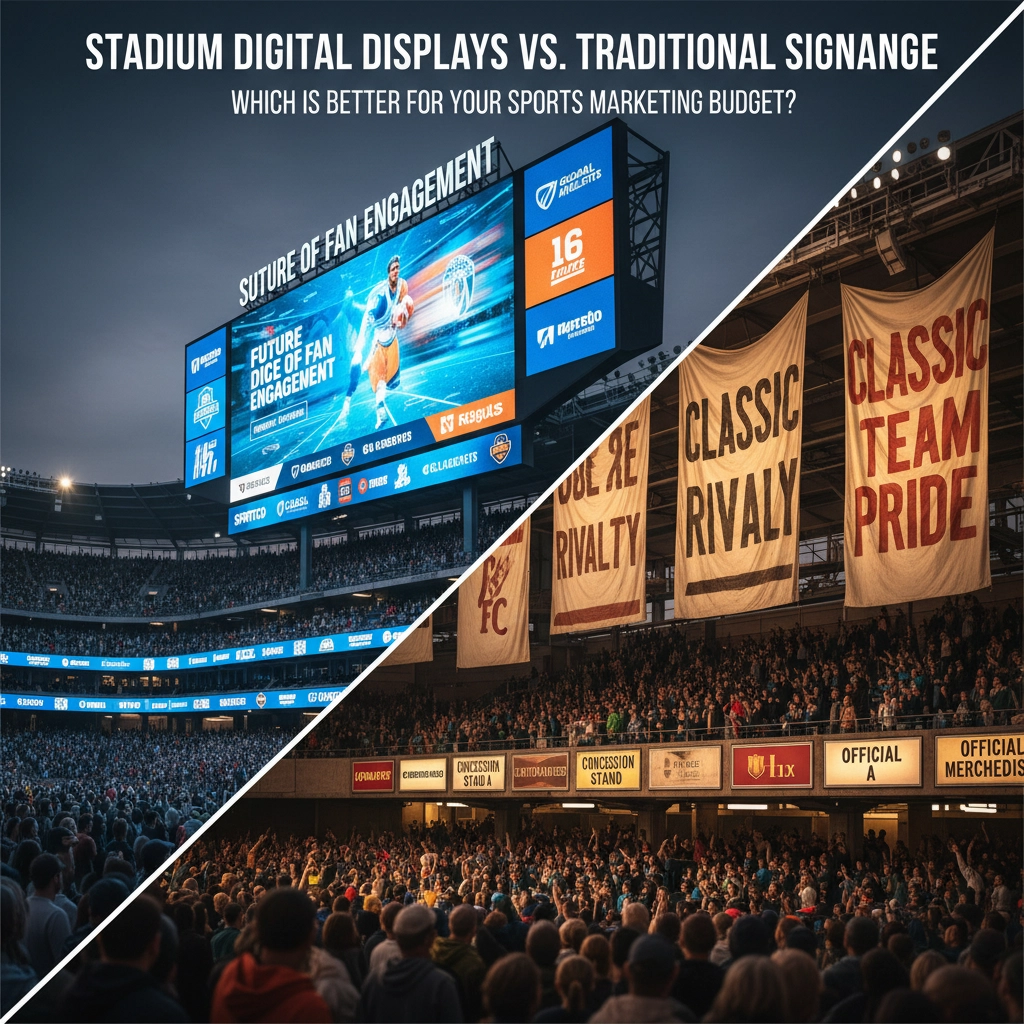
If you’re responsible for your sports venue’s marketing spend and want the best bang for your buck, the “Digital vs. Traditional” signage debate is a challenge you can’t ignore. The days of hanging fixed banners and calling it a day are fading fast. Teams, brands, and fans all expect more, more flexibility, more engagement, and definitely more ROI.
Below, we’re diving deep into how digital stadium displays stack up against traditional signage when it comes to fueling your sports marketing goals, with clear pros, cons, and actionable recommendations.
Digital Stadium Displays: The Modern Marketing Superpower
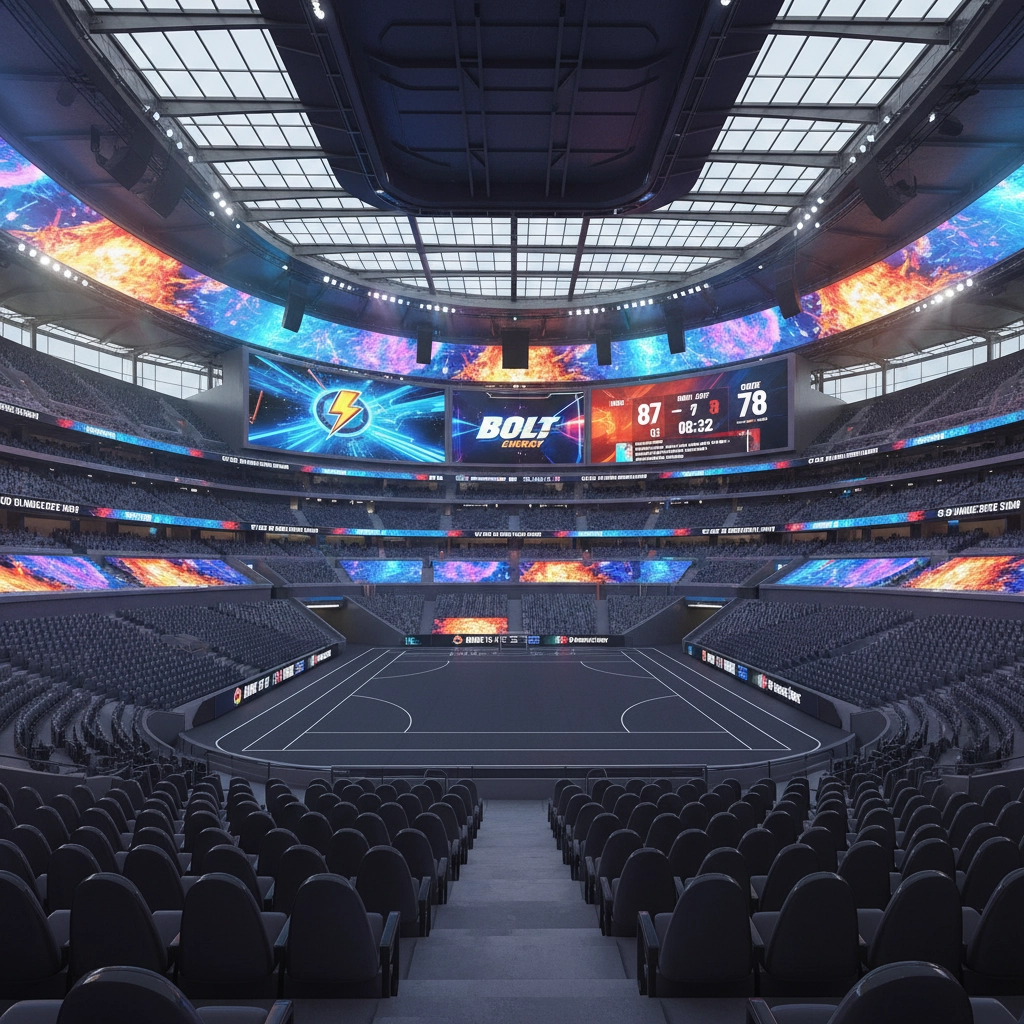
Walk into any packed stadium today, and you’ll see the difference right away. Massive LED boards pulse with exciting replays, promo codes flash in real-time, and sponsor messages weave effortlessly into the fan experience. This is the evolution of the “digital stadium.”
What Makes Digital Displays a Game-Changer?
- Dynamic, real-time content: Control every screen from a single dashboard. Update, swap, or daypart messages on the fly to match the game, the score, or the crowd’s vibe.
- Maximized advertising space: No more being stuck with a single static ad per location. Rotate sponsor spots, show multiple campaigns, and open up new inventory with zero extra printing or labor cost.
- Audience engagement: Pull up fan tweets, post instant polls, celebrate big moments, and serve action-triggered ads that keep the energy high.
- Flexibility for sponsors: Want to attract brands with last-minute offers or event-tied flash sales? Digital makes it easy.
The Financial Side
Sure, installing LED displays is a bigger upfront investment than buying banners. But digital signage systems can cut long-term costs, no recurring printing, less labor, no trucks shuttling supplies. Modern solutions use up to 50% less energy than earlier screens, and you can even power down displays remotely to save on utilities.
And let’s talk revenue. According to recent studies, nearly 7 out of 10 fans are more likely to purchase products promoted on a digital screen compared to static signage. Digital unlocks more ad slots, lets you rotate sponsors, and gives you premium pricing power for high-exposure moments.
Quick Pros & Cons
| Pros | Cons |
|---|---|
| Real-time updates & dynamic content | Higher initial investment |
| Multiple sponsors/messages per location | Requires power & occasional tech support |
| Better tracking, analytics, & remote control | Needs reliable internet for best performance |
| Higher long-term revenue potential | Potential for screen downtime (preventable with maintenance) |
Traditional Signage: Reliable but Rigid
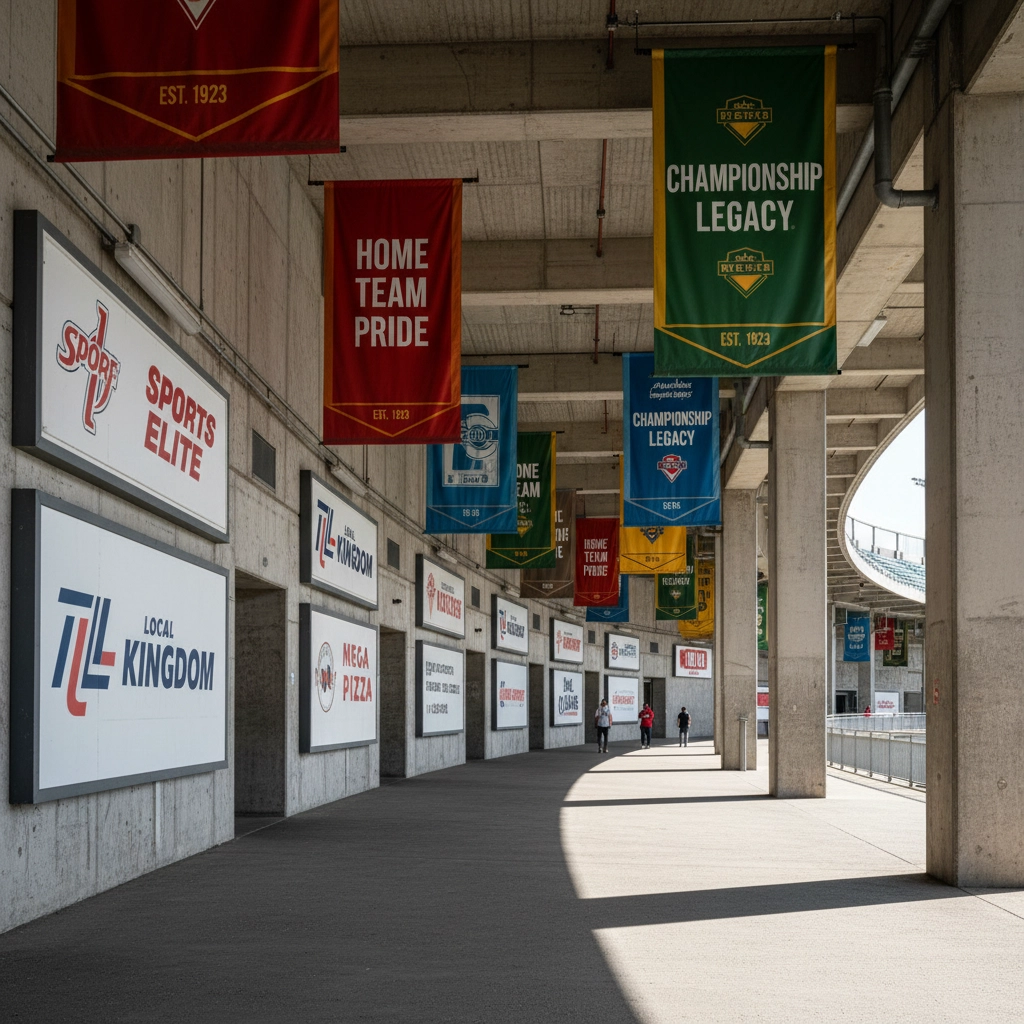
Old-school signage is not going anywhere just yet. Those vinyl banners, static billboards, and engraved sponsor boards offer some simple, underrated benefits, especially for venues just dipping their toes into advertising or working with legacy partnerships.
Where Traditional Signage Still Performs
- Low cost to launch: Printed posters and banners have a low upfront price and don’t require an electrical upgrade.
- Simplicity: No learning curve, software, or IT headaches.
- Works everywhere: No need for network connections or weatherproofed wiring.
- Permanent messaging: Great for year-long sponsors, hall-of-fame displays, and stadium rules that never change.
The Financial Side
The lower sticker price is appealing but beware the creeping costs. Every time messaging changes, someone has to pay for design, print, shipping, installation, and proper disposal of old materials, which racks up over multiple seasons. Plus, static signage locks you out of offering more to hungry advertisers who want action and flexibility.
Quick Pros & Cons
| Pros | Cons |
|---|---|
| Lower initial investment | Manual replacement = more labor, more delays |
| Always-on (no electricity needed) | One message per space limits revenue potential |
| Permanent, reliable presence | No flexibility, zero interactivity |
| No tech skills required | Cumulative waste from frequent updates |
Stadium Signage Showdown: Side-By-Side Comparison
Let’s get specific. If your CMO or board wants to see the numbers, break it down like this:
| Dimension | Digital Displays | Traditional Signage |
|---|---|---|
| Initial Cost | Higher (hardware, install, software) | Lower (print and hang) |
| Operating Costs | Electricity, routine maintenance | Printing, manpower, material |
| Revenue Generation | Multiple sponsors/ads per screen | Single static message |
| Content Flexibility | Real-time, remote updates | Manual, slow, costly to update |
| Fan Engagement | Video, interactivity, data capture | Limited attention |
| Environmental Impact | Reduces paper, less waste | Frequent replacements, more waste |
| ROI Timeline | Longer payoff, higher lifetime return | Quick but capped returns |
| Maintenance | Monitored remotely, quick fixes | Requires physical replacement |
ROI in Action: Why Digital Often Wins
When you break down the numbers over three to five years, digital nearly always comes out ahead for these reasons:
- Unlocks more inventory: More rotating ads = more sponsor deals.
- Easy last-minute changes: Ideal for promo codes, local weather alerts, or timely messages.
- Sells premium moments: Screens can command top dollar during big plays or halftime.
- Enhances fan journey: Screens guide fans, display wait times, even showcase social media shouts.
A recent study showed digital displays deliver nearly double the ad impressions per event versus static signage, with a much higher recall among fans. Over time, that drives more sponsor renewals and higher rates.
When to Choose Traditional Signage
Despite all those perks, traditional still earns its keep in some scenarios, such as:
- Permanent rules or naming rights: For year-round static messages.
- Venues with limited access to power/data: Rural fields, small gymnasiums, or historic properties.
- Ultra-tight budgets: When every dollar is earmarked, and advertising goals are modest.
- Backup for digital reliability: Having a “Plan B” message in case of rare tech hiccups.
The Hybrid Play: Best of Both Worlds
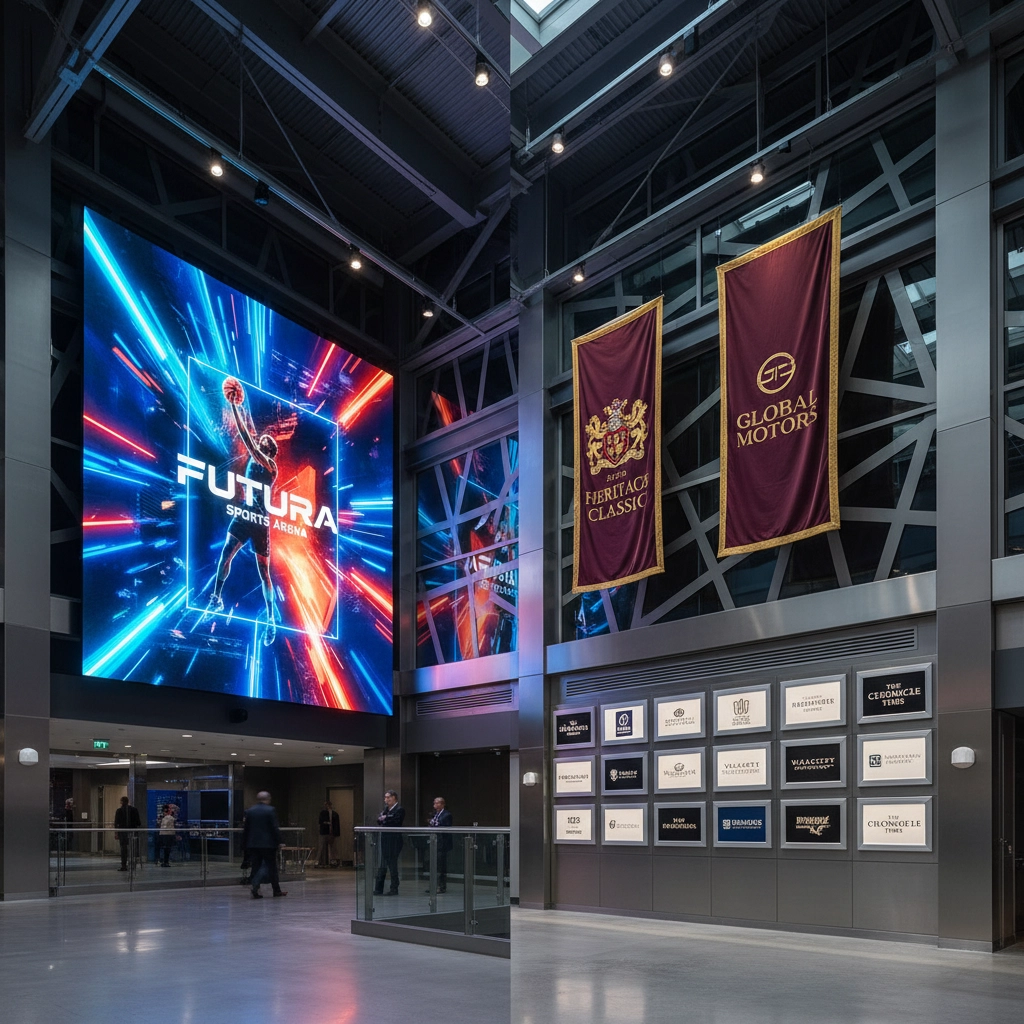
The savviest sports marketing leaders mix and match digital and traditional signage for optimal coverage and spend. Picture this:
- Digital displays in premium zones: Entrances, main concourses, scoreboard areas, VIP suites.
- Traditional banners in secondary spaces: Perimeter fences, legacy wall spaces, non-critical wayfinding.
This approach keeps upfront investment manageable while letting you layer in new revenue and audience experience enhancements where the returns truly justify the spend.
Real-World Success: Sports Media Inc. Delivers Flexible Solutions
At Sports Media Inc., we help stadiums, arenas, and athletic complexes find the perfect blend. Whether you need an all-digital upgrade or want strategic digital screens to amplify your existing signage, our team designs, installs, and manages campaigns for every budget and fan demographic.
Explore our full range of products and services at sportsmedia.net/services, or connect with us to talk through the best plan for your facility.

The Bottom Line (and the Scoreboard)
In today’s sports world, digital displays are the clear MVP for venues that want true flexibility, higher long-term ROI, and better sponsor engagement. Yes, the upfront outlay is more, but you’re setting your venue up for year-after-year revenue growth and a reputation as a tech-forward fan experience leader.
Still weighing your options? Take a closer look at your budget, sponsor needs, and traffic flow. If long-term revenue matters, don’t wait. The digital future is already here( make sure your stadium is in the game.)