
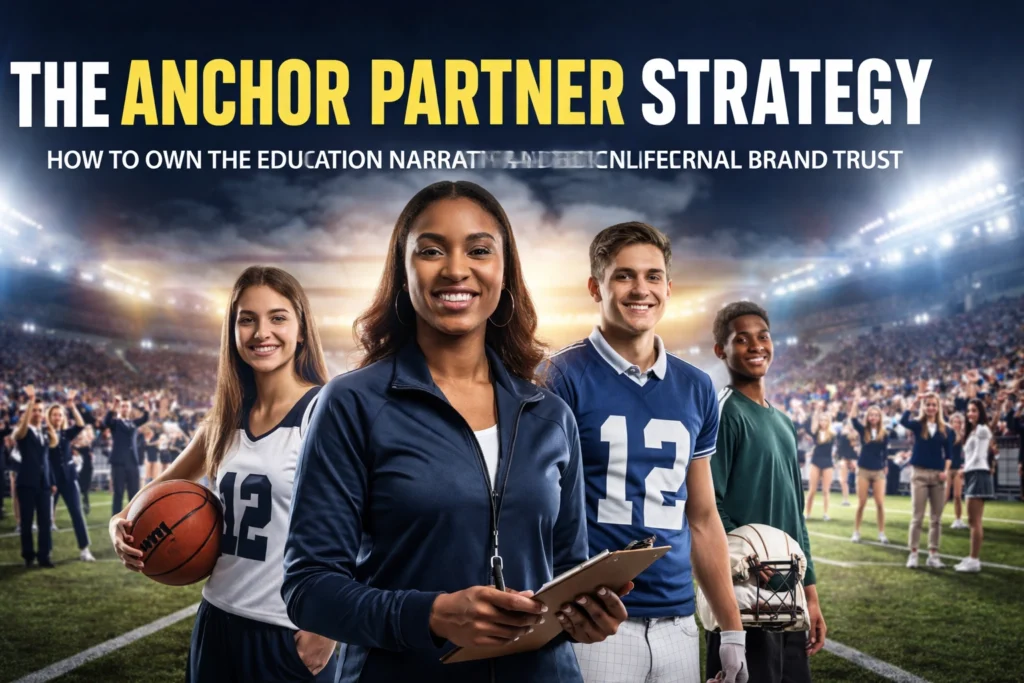
Let's cut straight to it. If you're a Fortune 100 brand still thinking about education partnerships as charity, you're leaving billions on the table. The smartest companies in the world aren't sponsoring schools for goodwill. They're building infrastructure, owning distribution, and crafting narratives that create lifelong customers and a workforce pipeline that feeds their growth for decades.
This is the Anchor Partner Strategy. And it's how your brand becomes synonymous with "future-ready" in the minds of students, parents, educators, and communities across America.
What Is an Anchor Partner?
An Anchor Partner isn't just another logo on a school banner. It's the foundational brand that powers an entire educational ecosystem. Think of it as planting your flag at the center of a movement, not tagging along on the sidelines.
When you become an Anchor Partner, you're not buying impressions. You're buying infrastructure access, talent development, brand trust, and a direct line to the next generation of consumers and employees.
The difference between a sponsor and an Anchor Partner is simple:
- Sponsors get visibility.
- Anchor Partners get ownership.
Ownership of the narrative. Ownership of the talent funnel. Ownership of the future.
The Three Pillars: Infrastructure, Distribution, and Narrative
Every successful Anchor Partner strategy rests on three pillars. Miss one, and the whole thing falls apart.
1. Infrastructure
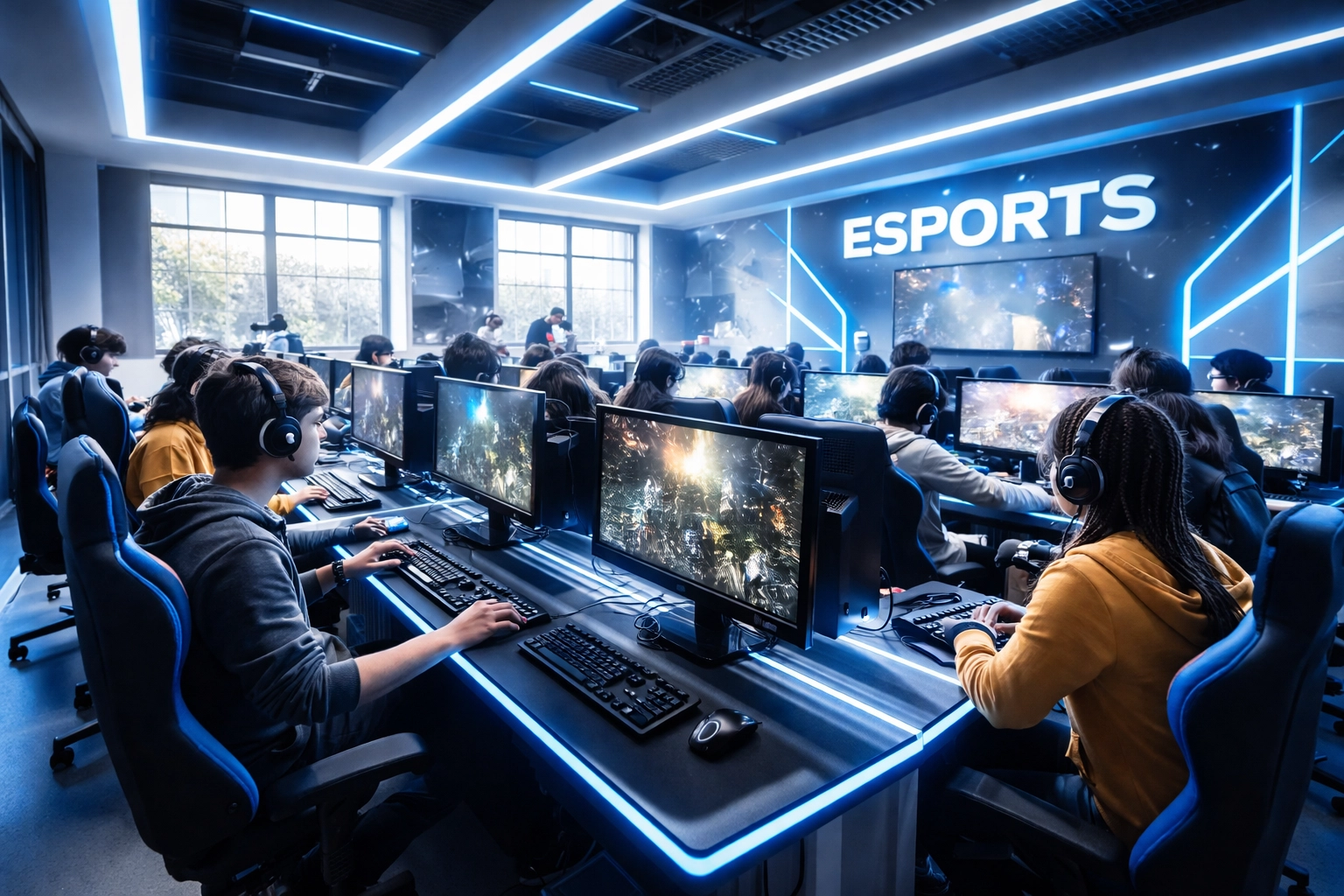
You need physical presence. We're talking about deploying branded learning environments directly into U.S. high schools. These aren't just computer labs. They're multi-use platforms built for competitive esports, cloud curriculum, streaming studios, data analytics dashboards, content creation, and career pathway exploration.
Your brand becomes the backbone of how students learn, compete, and prepare for the workforce. That's infrastructure that matters.
2. Distribution
Schools are the original distribution network. Every district, every campus, every classroom is a node in a massive system that reaches millions of students and their families. When your brand powers the tools and experiences inside those schools, you're not buying ads. You're building a distribution channel that competitors can't replicate.
This is how you reach Gen Z and Gen Alpha where they actually are, not where you hope they'll scroll.
3. Narrative
Here's where most brands fumble. They deploy programs but forget to own the story. The Anchor Partner doesn't just provide resources. They co-create messaging with schools and districts. They align on shared language and branding strategies that showcase educational strengths, workforce readiness, and community impact with one unified voice.
When a school says, "We're preparing students for careers in cloud computing, AI, and digital media," your brand should be the first name that comes to mind. That's narrative ownership.
The 90-Day Pilot Model: Start Fast, Scale Smart
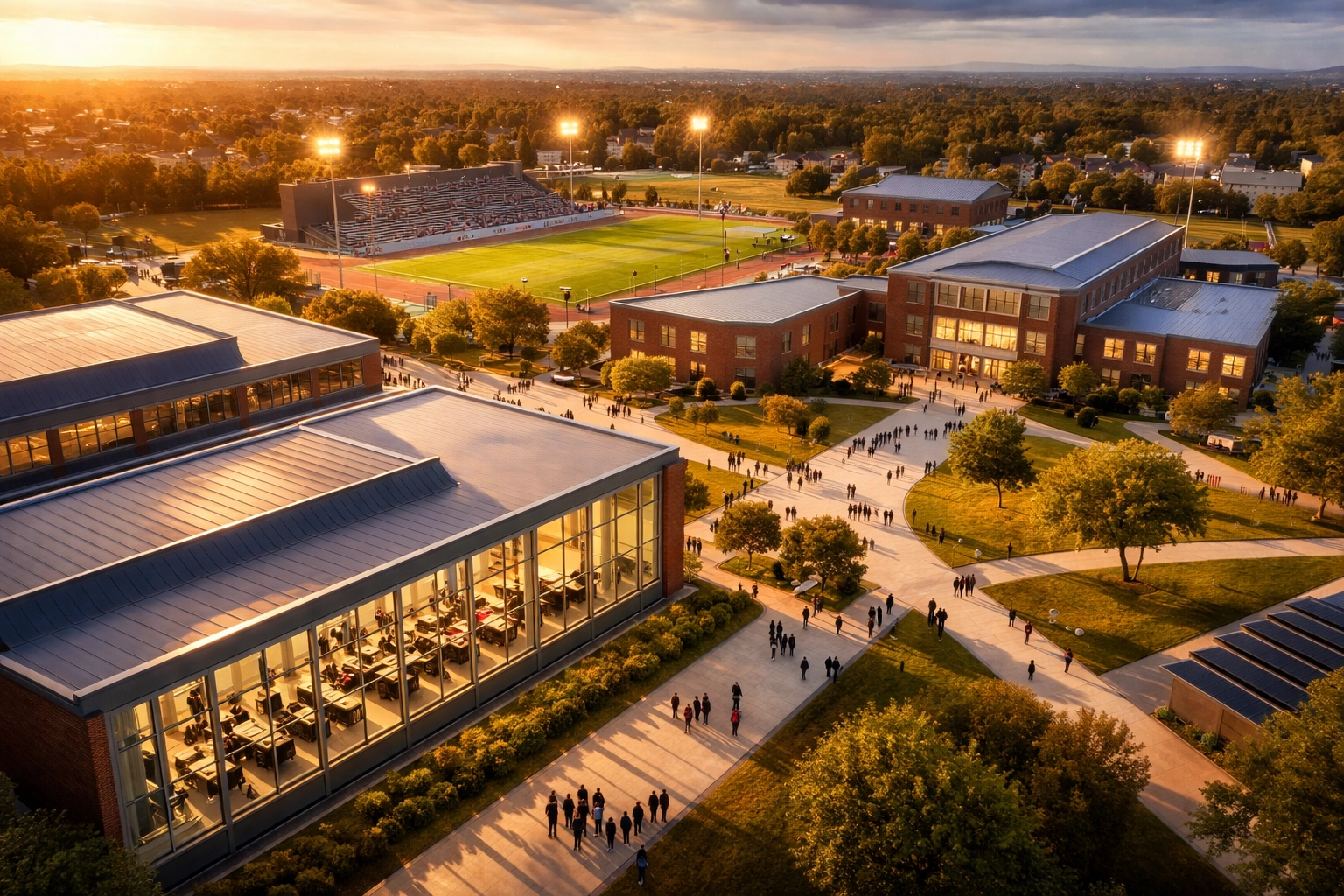
Fortune 100 companies don't need to commit to a nationwide rollout on day one. The smartest approach is a controlled pilot that proves concept, generates data, and builds internal buy-in.
Here's how it works:
Phase 1: Select 10-25 Schools
Work with a deployment partner to identify high-impact school districts. Look for diversity in geography, demographics, and community engagement. This isn't about cherry-picking easy wins. It's about proving scalability.
Phase 2: Deploy Branded Learning Environments
Install multi-use platforms that combine esports competition, cloud curriculum access, streaming capabilities, data analytics, and career exploration tools. Each environment carries your brand and integrates your products, services, or educational content.
Phase 3: 90-Day Evaluation
Track engagement metrics, curriculum completion rates, media exposure, and workforce pathway enrollment. At the end of 90 days, you have hard data on ROI, community sentiment, and scalability potential.
Phase 4: Scale or Iterate
Based on pilot results, expand to additional districts, refine the program, or layer in new curriculum tracks. The 90-day model gives you flexibility without locking in massive capital upfront.
This is not a sponsorship deck. This is a national education infrastructure play with built-in evaluation checkpoints.
What Your Brand Actually Gets
Let's be clear about the value exchange. When you anchor a school-based learning ecosystem, you're not just doing good. You're building competitive advantages that compound over time.
Workforce Pipeline
Every student who earns a certification, completes a curriculum module, or develops skills on your platform is a potential future employee. You're not just recruiting talent. You're developing it from the ground up.
Career pathways can include:
- Cloud computing and infrastructure
- Artificial intelligence and machine learning
- Game development and interactive media
- Streaming and content creation
- Digital marketing and analytics
- Logistics and supply chain simulation
- Cybersecurity fundamentals
These aren't theoretical. These are real skills tied to real jobs at Fortune 100 companies.
Brand Trust and Loyalty
Students who learn on your platform, compete in your leagues, and earn your certifications develop a relationship with your brand that lasts a lifetime. You're not interrupting their attention. You're earning it by providing genuine value during their formative years.
That trust translates to consumer loyalty, employer preference, and community advocacy.
Data and Insights
Every interaction inside a branded learning environment generates data. Engagement patterns, skill development trajectories, content preferences, career interests. This is first-party data that helps you understand the next generation of customers and employees better than any survey or focus group ever could.
Media Amplification
Esports competitions, streaming events, and school showcases generate organic media coverage. When your brand powers these moments, you get exposure that feels authentic because it is authentic. This isn't paid placement. It's cultural integration.

Why This Works for Fortune 100 Companies
Education budgets move slower than brand budgets. That's a feature, not a bug. It means that once you're embedded in a school ecosystem, competitors can't easily displace you. You become the default, the standard, the trusted partner.
Here's the strategic logic:
- Esports gives permission to enter schools. It's engaging, it's growing, and it's already where students spend their time.
- Cloud, data, and AI give justification. These are the skills schools want to teach and the skills employers need. Your brand becomes the bridge.
- Media gives amplification. Every competition, every stream, every student success story is content that spreads your message.
- Physical presence gives permanence. Branded learning environments are tangible. They're in the building, every day, with your logo front and center.
You're not begging for sponsorship. You're offering infrastructure, distribution, and narrative in a single, scalable package.
The Opportunity Is Now
Schools are actively seeking partners who can help them prepare students for careers in technology, media, and digital commerce. The demand is there. The infrastructure models exist. The only question is which brands will step up to anchor these programs.
If you're a Fortune 100 company looking to build a workforce pipeline, deepen brand trust, and reach the next generation of customers in an authentic way, the Anchor Partner Strategy is your playbook.
This isn't about writing a check and hoping for the best. It's about building something that compounds, something that creates real value for students, schools, and your business.
Ready to explore what an Anchor Partner program could look like for your brand? Let's talk.
Sports Media Inc. specializes in deploying branded learning environments, esports infrastructure, and workforce development programs in partnership with schools, districts, and Fortune 100 brands. Learn more about our youth education initiatives and esports solutions.