
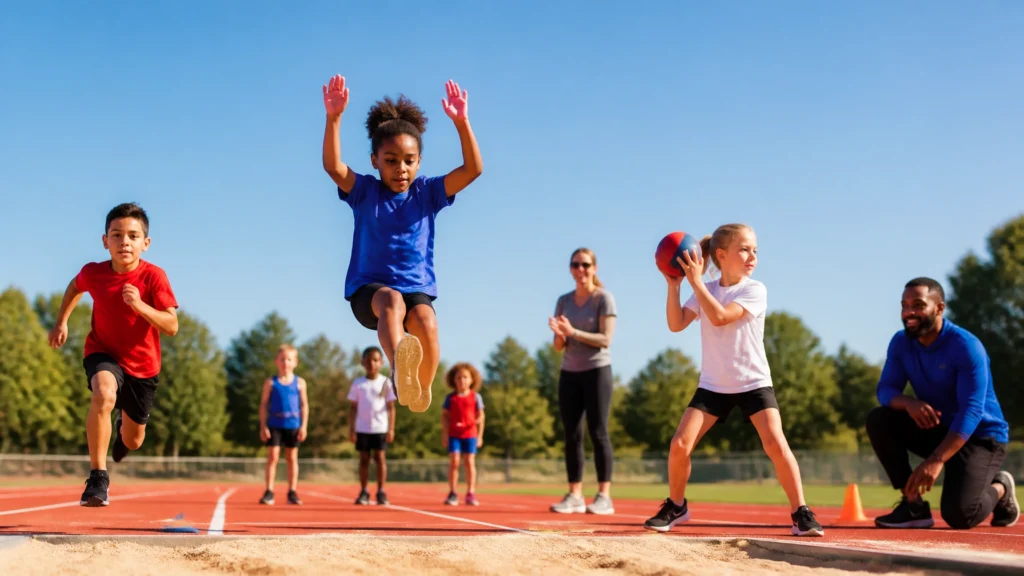
What if your child’s next great adventure starts with a starting line, a sand pit, or a soft foam ball? Track and field for kids is one of the best ways to introduce movement, teamwork, confidence, and healthy competition. It is also a fantastic way to help children learn sports in a low-pressure, high-energy environment.
This guide explains how track and field supports youth sports education, how parents can make practice fun, and how the complete Sports Media learning system combines print books, audio books, coloring books, puzzle books, online games, and video content.
Why Track and Field Is Great for Kids
Track and field is built around three basic movements:
- Running
- Jumping
- Throwing
That simple foundation makes the sport accessible to nearly every child. A young athlete does not need to master a complicated playbook or remember a dozen positions. They can start by running to a cone, jumping over a line, or tossing a lightweight ball toward a target.
These skills also transfer to other sports. Quick feet help in soccer. Balance helps in gymnastics. Explosive movement helps in basketball. Coordination helps everywhere, including the kitchen when someone is trying to carry three snacks and a water bottle at once.
Track and field can help children develop:
- Cardiovascular fitness
- Balance and coordination
- Strength and body awareness
- Goal-setting skills
- Confidence and perseverance
- Teamwork through relays and group games
The goal for young children should be enjoyment, exploration, and steady improvement, not turning every practice into the Olympic Trials.
Track and Field Events for Young Athletes
Children can explore many track and field events in age-appropriate ways.
Running Events
Young athletes may begin with short sprints, fun runs, obstacle courses, and relay races. These activities teach children how to start, stop, change direction, and run with control.
For beginners, parents and coaches can use simple cues:
- Keep your eyes forward
- Relax your shoulders
- Pump your arms
- Take quick, light steps
- Run through the finish line
Relay races are especially valuable because they add teamwork to an individual sport. Passing a baton teaches timing, communication, and trust. It also creates the perfect opportunity for a dramatic slow-motion celebration, even if the team finishes fourth.
Jumping Events
Long jump activities can begin with standing jumps, one-foot takeoffs, and safe landings in a soft area. Children can practice jumping over low lines or into a sand pit under adult supervision.
Teach young athletes to:
- Bend their knees before takeoff
- Swing their arms forward
- Push from one foot
- Land with knees bent
- Keep their body balanced
High jump should be introduced carefully with low equipment and qualified instruction. Young athletes should focus on confidence, body control, and safe landing techniques before attempting more advanced movements.
Throwing Events
Throwing activities should always use age-appropriate equipment. Foam balls, beanbags, soft javelins, and lightweight training tools are excellent for beginners.
Children can learn to:
- Face the target
- Use the opposite foot forward
- Keep their eyes on the target
- Throw only when the area is clear
- Follow through under control
Safety matters most with throwing events. Establish a clear throwing line and make sure every child knows when it is safe to retrieve equipment.

A Simple Track and Field Practice for Kids
A short, varied practice is usually more successful than a long session filled with repetitive drills. Here is a simple 35-minute plan for children ages 5 to 10.
1. Warm-Up, 5 Minutes
Try light jogging, marching, arm circles, skipping, and gentle leg swings. Keep the movement playful. Ask children to jog like a robot, hop like a frog, or move like they are sneaking past a sleeping dragon.
2. Running Games, 10 Minutes
Set up cones for short sprints, shuttle runs, or relay races. Let children run in small groups so they have plenty of space and do not spend most of practice standing in line.
3. Jumping Practice, 8 Minutes
Use floor lines, hoops, or soft markers. Practice two-foot jumps, one-foot takeoffs, and controlled landings. Celebrate body control, not just distance.
4. Throwing Skills, 8 Minutes
Use beanbags or foam balls. Have children throw toward targets such as hoops, buckets, or colored cones. This develops accuracy while keeping the activity safe and engaging.
5. Cool Down, 4 Minutes
Finish with walking, breathing exercises, and gentle stretches. Ask each child to name one activity they enjoyed. That simple question helps children connect exercise with positive memories.
For additional kid-friendly event explanations, parents can explore resources from Britannica Kids and Nike’s track and field overview.
The Track and Field Learning System
Sports Media’s youth education approach is designed for different learning styles. Some children love stories. Some love games. Some would rather color a running shoe than read about one. The complete system gives them multiple ways to learn.

1. Print Book
The print book introduces children to the basics of track and field through an upbeat story featuring young characters, coaches, and exciting events. It helps children understand running, jumping, throwing, practice, confidence, and teamwork.
Explore the Track and Field Print Book.
2. Audio Book
The audio book lets children learn during car rides, quiet time, or before practice. Listening helps bring the story to life and gives children a screen-free way to engage with sports education.
Listen to the Track and Field Audio Book.
3. Coloring Book
Coloring gives young learners a hands-on way to connect with track and field. Children can explore athletes, equipment, running tracks, and event scenes while building focus and fine-motor skills.
Find the Track and Field Coloring Book.
4. Puzzle Book
Puzzles reinforce vocabulary, observation, problem-solving, and sports concepts. Word searches, mazes, matching games, and other activities turn learning into play.
Try the Track and Field Puzzle Book.
5. Online Game
The online game platform gives children an interactive way to review sports concepts and stay engaged between reading sessions. Visit SportsMedia.us to explore the online experience.
6. Video Content
Short videos help children see sports skills in action. They can watch, listen, repeat, and practice at their own pace. Browse the YouTube Kids sports playlist for sports-focused video content.
7. Repeat and Practice
The magic happens when children move between formats. They may read about sprinting, listen to the story in the car, color a track scene, solve a relay puzzle, watch a video, and then try a running game outside.
That is more than entertainment. It is a complete learning loop built around curiosity, repetition, movement, and confidence.
How Parents Can Make Learning Fun
Parents do not need to be professional coaches to support youth sports education. A few small habits can make a big difference:
- Ask questions. “Which event would you try first?” is more inviting than “Did you win?”
- Celebrate effort. Praise practice, patience, and improvement.
- Keep sessions short. Ten minutes of joyful activity beats an hour of frustration.
- Use everyday spaces. A sidewalk, backyard, park, or hallway can become a mini training zone.
- Let children choose. Giving kids a voice helps them develop ownership.
- Avoid early specialization. Exploring multiple events keeps the sport fresh and builds broad movement skills.
- Model enthusiasm. If you cheer for the attempt, your child is more likely to try again.
Always provide water, appropriate footwear, safe space, and adult supervision. For structured training, consult a qualified youth coach and follow the guidance of your child’s healthcare professional.
Corporate Sponsors Wanted
Sports Media is seeking corporate sponsors for these educational games and online platforms. Sponsorship helps expand access to sports learning for children through books, digital games, video content, and family-friendly educational experiences.
Corporate partners can support:
- Youth sports education initiatives
- STEM-ready learning environments
- Digital game development
- School and library access
- Community sports programs
- Educational video production
- Inclusive opportunities for children to learn sports
Sponsors can also align their brands with active families, positive youth development, literacy, technology, and healthy living. To explore sponsorship and partnership opportunities, visit the Sports Media youth education page or contact Sports Media.
Final Lap: Let’s Get Kids Moving
Track and field gives children a simple, exciting invitation: run, jump, throw, try again, and have fun.
With the right support, a child’s first sprint can become a lifelong love of movement. A coloring page can spark curiosity. A puzzle can build confidence. A video can explain a new skill. A game can turn practice into play.
That is the power of kids sports books, children’s sports books, and a complete learning system designed to help every child discover the joy of sports.
Affiliate disclosure: Some book links in this article may be affiliate links. Sports Media may earn a commission at no additional cost to you.
#KidsSports #YouthSports #SportsBooks #LittlePro #LearnToPlay #SportsEducation #ParentingTips #ActiveKids #TrackAndField #KidsRunning