
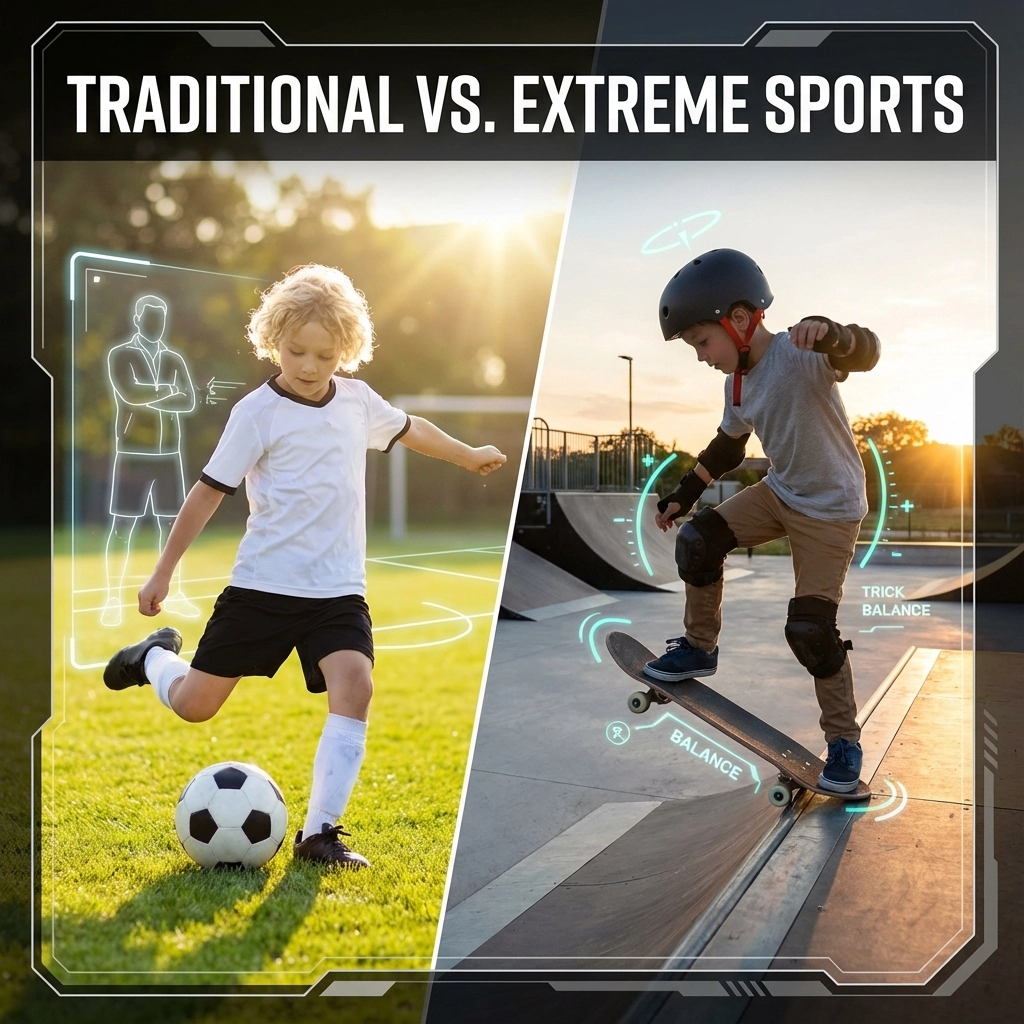
When it comes to getting kids excited about sports, there's an ongoing debate: should we stick with traditional sports like football and basketball, or embrace the thrill of extreme sports like skateboarding and BMX? Here's the thing – why choose? The future of youth sports education lies in combining both worlds through engaging animation and interactive play.
At Sports Media Inc., we've discovered that kids learn best when they're having fun, and our cartoon sports character series proves that animation can turn complex sports rules into digestible, entertaining content. Whether we're teaching the fundamentals of baseball or the techniques of parkour, animated characters make learning stick.
The Power of Traditional Sports in Youth Development
Traditional sports have earned their place in youth development for good reason. Football teaches strategic thinking and teamwork. Basketball develops hand-eye coordination and quick decision-making. Soccer builds endurance and spatial awareness. These sports offer structured environments where kids learn discipline, respect for rules, and the value of practice.

But here's where traditional sports education often falls short – it can feel intimidating or boring to today's digital-native kids. That's where our animated approach changes everything. Instead of just explaining that a basketball has specific dribbling rules, our cartoon characters demonstrate these concepts through fun scenarios that kids actually want to watch.
Take our basketball character, "Bounce," who shows kids how proper dribbling isn't just about bouncing a ball – it's about control, rhythm, and setting up your next move. Through animated stories, kids see Bounce navigate challenges that mirror real game situations, making the learning process feel like entertainment rather than instruction.
Traditional sports also provide excellent foundational skills that transfer to other activities. The hand-eye coordination from tennis helps with video games. The strategic thinking from football applies to problem-solving in school. The teamwork from soccer builds social skills that last a lifetime.
Why Extreme Sports Deserve a Spot in Youth Education
Now let's talk about extreme sports – and no, we're not suggesting kids start base jumping tomorrow. Extreme sports like skateboarding, snowboarding, and BMX offer unique benefits that traditional sports sometimes miss.
First, extreme sports emphasize individual creativity and self-expression. While team sports focus on following plays and working within systems, extreme sports encourage kids to find their own style and push their personal boundaries safely. This builds confidence and teaches kids that there's more than one way to achieve success.

Extreme sports also connect kids with their environment in ways traditional sports don't. Surfing teaches respect for nature and ocean safety. Parkour develops spatial awareness and problem-solving as kids navigate obstacles. Skateboarding builds balance and persistence – because you're going to fall, and you're going to get back up.
Our animated extreme sports characters make these activities accessible to kids who might never have considered trying them. "Shred," our skateboarding character, doesn't just show kids how to kickflip – he teaches them about falling safely, wearing proper protective gear, and respecting public spaces. Through animation, we can show the progression from basic balance to advanced tricks without anyone getting hurt in the learning process.
The beauty of extreme sports in an animated format is that kids can visualize themselves succeeding before they ever step on a board or bike. This mental rehearsal builds confidence and reduces the fear factor that sometimes keeps kids from trying new activities.
How Animation Bridges Both Worlds
Animation is the secret sauce that makes both traditional and extreme sports accessible to kids. Unlike live-action instruction, animated characters can demonstrate techniques in slow motion, show internal thought processes, and even break the laws of physics when it helps illustrate a point.
Our cartoon sports characters each have distinct personalities that resonate with different types of kids. Some kids connect with "Strike," our determined baseball character who never gives up. Others relate to "Flip," our parkour character who sees obstacles as opportunities. This variety ensures that every child finds someone to root for and learn from.

Animation also allows us to gamify learning in ways that traditional instruction can't match. When kids watch our soccer character "Goal" navigate a maze-like field while explaining offside rules, they're not just learning about soccer – they're solving puzzles and thinking strategically. This multi-layered approach keeps kids engaged longer and helps information stick better.
The visual nature of animation is particularly powerful for teaching sports rules, which can be abstract concepts for young minds. Instead of reading about what constitutes a foul in basketball, kids watch it happen in animated scenarios where the consequences are clear but not intimidating.
Gamification: Where Learning Meets Play
Digital games based on our animated characters take sports education to the next level. Traditional sports games can teach kids about team formations, scoring systems, and strategic thinking. Extreme sports games focus on individual skill building, risk assessment, and creative problem-solving.
But here's what makes our approach different – our games aren't just digital versions of the real sports. They're educational tools that break down complex movements and strategies into manageable challenges. A snowboarding game might start by teaching kids how to balance on flat ground before progressing to gentle slopes and eventually advanced terrain.

The modular nature of our gaming approach means kids can focus on specific skills. Want to improve your tennis serve? There's a mini-game for that. Curious about skateboard safety? Our characters walk you through proper helmet fitting and pad placement in an interactive format that makes safety feel important rather than burdensome.
Gamification also provides immediate feedback, which is crucial for skill development. When kids see their animated character successfully execute a move they've been practicing, it reinforces the learning and motivates them to keep trying.
The Perfect Blend: Why Kids Need Both
The real magic happens when kids experience both traditional and extreme sports through our animated educational platform. Traditional sports teach kids how to work within established systems, follow rules, and collaborate effectively. Extreme sports teach them to think outside the box, express individuality, and push personal boundaries.
Kids who understand both worlds are better equipped for life. They know when to follow the playbook and when to innovate. They can work effectively in teams while maintaining their individual identity. They respect established rules while still thinking creatively about solutions.
Our research shows that kids who engage with both types of sports content show improved problem-solving skills, better physical coordination, and increased confidence in trying new activities. They're also more likely to stay active throughout their lives because they've discovered that sports and physical activity come in many forms.
Building Tomorrow's Athletes and Innovators
The future belongs to kids who can adapt, think creatively, and work well with others. By combining traditional and extreme sports education through animation and interactive play, we're not just teaching kids how to throw a football or land a skateboard trick – we're building critical thinking skills, creativity, and confidence.
Our animated approach removes barriers that might prevent kids from exploring different sports. Maybe a child is intimidated by the physicality of football but fascinated by the strategy. Our animated characters can focus on the mental aspects first, building interest and understanding before any physical contact occurs.
Similarly, kids who might never have access to a skateboard park can still learn about balance, spatial awareness, and calculated risk-taking through our extreme sports characters. Animation democratizes sports education by making it accessible regardless of location, equipment, or physical limitations.
The combination of traditional discipline and extreme creativity prepares kids for a world where success requires both structure and innovation. Whether they grow up to be professional athletes, engineers, artists, or entrepreneurs, the lessons learned from both traditional and extreme sports will serve them well.
Ready to give your kids the best of both worlds? Our cartoon sports character series makes learning fun, accessible, and comprehensive. Because every child deserves to discover their passion, whether it's on a basketball court or a skateboard ramp – and animation makes it all possible.