
Success in the modern world is rarely a solo performance. Whether your child grows up to lead a surgical team, manage a global marketing campaign, or engineer the next generation of renewable energy, their ability to work with others will be the deciding factor in their professional trajectory. At Sports Media Inc., we believe that the playing field is the first and most important classroom for these essential life lessons.
By engaging in sports, children enter a unique environment where they must navigate complex social dynamics, manage their emotions, and align their individual efforts with a larger group goal. This is not just about physical activity. It is about building a foundation for lifelong success. This tenth and final installment of our series focuses on how teamwork serves as the ultimate bridge between childhood play and a high-performance career in the Fortune 100 talent funnel.
The Fortune 100 Talent Funnel: Why CEOs Love Athletes
Top-tier companies are constantly looking for candidates who understand how to function within a team. When recruiters for Fortune 100 firms look at resumes, they are often looking for indicators of soft skills like leadership, resilience, and collaboration. Participation in organized sports is a major indicator of these traits.
When a child learns to play baseball, football, or soccer, they are effectively entering an early stage talent funnel. They are learning that their individual performance is only as valuable as its contribution to the group. If a pitcher throws a perfect game but the outfielders miss every fly ball, the team still loses. This realization is the same one that drives successful corporate departments. Understanding interdependence at age eight prevents entitlement at age twenty-five.
The skills learned on the grass or the court translate directly to the boardroom. Resilience, the ability to bounce back from a loss without losing motivation, is perhaps the most sought-after trait in high-stakes environments. Sports teach children that failure is a data point, not a permanent state. This mindset is what separates the people who plateau in their careers from those who climb to executive levels.

Esports Pods: The Intersection of STEM and Teamwork
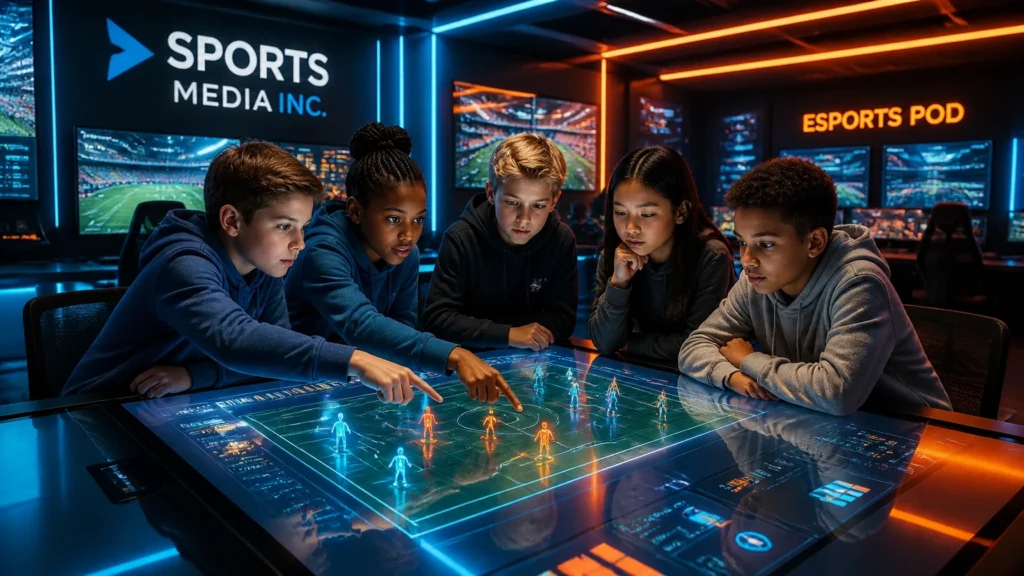
The definition of a team is changing. While traditional sports remain vital, the rise of digital competition has introduced new ways for children to learn collaboration. Sports Media Inc. is at the forefront of this shift with our Esports Pods, which serve as critical education infrastructure for the next generation.
These pods are not just for gaming. They are high-tech environments designed to foster STEM readiness and digital literacy. In an Esports Pod, teamwork happens at the speed of light. Players must communicate via headsets, coordinate multi-step strategies in real-time, and analyze data on the fly. This is the exact type of collaboration required in modern tech hubs and engineering firms.
By integrating Esports into educational infrastructure, we are helping children develop a technical edge. They learn how to use advanced software, understand network latency, and engage with data analytics. These are the building blocks of workforce development in a digital-first economy. Teamwork in this digital arena requires a level of precision and split-second communication that prepares students for high-pressure careers in cybersecurity, data science, and systems architecture.

Strategic Communication: The Workplace's Most Valuable Asset
One of the most difficult skills to teach in a traditional classroom is effective communication under pressure. In a game, there is no time for long-winded explanations. You have to be clear, concise, and direct. This is a skill that many adults still struggle with, but it is one that children can master through the right sports training.
Our "How to Learn and Play Sports" YouTube Kids playlist emphasizes these communication basics. Whether it is calling for the ball in soccer or communicating a defensive switch in basketball, children learn that silence is the enemy of team success. They also learn the difference between being a "boss" and being a "leader." A boss tells people what to do, whereas a leader motivates their teammates to do their best.
These communication habits form the basis of professional networking and internal corporate relations. A child who can clearly articulate a strategy to their teammates during a timeout is much more likely to be the adult who can lead a cross-functional team through a difficult product launch. They understand how to listen to feedback, how to give constructive criticism, and how to stay calm when the stakes are high.

Resilience and Leadership: Preparing for the Big League
In the professional world, things rarely go exactly according to plan. Projects get delayed, budgets get cut, and competitors launch better products. The individuals who succeed are those who can lead their teams through the storm without losing focus. This level of leadership is a muscle that must be exercised early.
Sports provide a safe space to fail. When a child misses a goal or loses a game, they feel the sting of defeat, but they also learn that the sun still rises the next day. They learn to analyze what went wrong, make adjustments, and try again. This process of continuous improvement is known in the business world as "Agile Methodology," but athletes have been doing it for centuries.
By focusing on teamwork, children also learn about accountability. They realize that their teammates are counting on them to show up for practice and give their full effort during the game. This sense of responsibility is a core component of workforce development. Fortune 100 companies do not just want smart people, they want reliable people who understand their role in the larger infrastructure.

The Role of Educational Infrastructure in Career Readiness
At Sports Media Inc., we are committed to building the infrastructure that supports this journey. From our physical stadium activations to our digital platforms, every touchpoint is designed to engage fans and educate the next generation. We see a direct link between the "Junior Fan Zones" in stadiums and the career readiness of those young fans a decade later.
Our infrastructure projects, such as the Esports Pods, are designed to be scalable solutions for schools and community centers. They provide a space where STEM education meets social-emotional learning. When children use these facilities, they are not just "playing." They are engaging in a sophisticated form of workforce preparation that is recognized by industry leaders as a primary source of high-quality talent.
Investment in these areas is an investment in the future of the American workforce. By providing the tools and the training, we are ensuring that the children of today have the collaborative skills necessary to lead the organizations of tomorrow. This is why we are so passionate about our educational initiatives and our partnerships with sports venues across the country.
Get Your Child Started: The "How to Learn and Play Sports" Playlist
The journey to success starts with the first step, and for many children, that step is simply learning the basics of a new game. We invite you to explore our How to Learn and Play Sports YouTube Kids Playlist. This resource is designed to be helpful, energetic, and safe for young viewers.
Over the last ten days, we have covered everything from skiing safety to gymnastics. Each of these sports offers a unique way to practice teamwork. Whether your child is learning to coordinate their movements with a partner in gymnastics or working as a unit on the football field, they are building the skills that will change their life.
Watch the full series with your child today and discover how much fun learning can be. By giving them the gift of sports, you are giving them a head start in the race toward a successful and fulfilling career.

Final Thoughts on Teamwork
The world is getting more connected every day. The problems we face are too large for any one person to solve alone. By teaching our children to value teamwork, we are preparing them to be the innovators and leaders the future requires. Thank you for following along with our ten-day series on sports and skill-building. For more information on how Sports Media Inc. is transforming the fan experience and supporting youth development, visit our About Us page or explore our Youth Education solutions. Let's get our kids in the game.
5 Hooks for the Fortune 100 Talent Funnel and Education Infrastructure
Hook 1: The New Career Pipeline
Forget traditional internships. The real Fortune 100 talent funnel begins on the youth sports field and in modern Esports Pods. Discover how early teamwork training is becoming the top predictor of executive success.
Hook 2: Infrastructure as a Service to Education
Esports Pods are more than gaming hubs; they are critical education infrastructure. By merging STEM readiness with digital collaboration, these high-tech zones are preparing the next generation for the global workforce.
Hook 3: The STEM Side of Sports
How do you prepare a child for a career in data science? Start with sports. From analyzing performance metrics to mastering digital strategy in an Esports Pod, sports media is the new gateway to STEM excellence.
Hook 4: Building Corporate Leaders in the Fan Zone
Junior Fan Zones and interactive stadium technology are the first steps in a lifelong journey of workforce development. Learn how Sports Media Inc. is using stadium infrastructure to foster leadership and communication skills in young fans.
Hook 5: Teamwork is the Ultimate Skill
In a world of automation, the ability to collaborate is irreplaceable. See how our specialized education infrastructure is helping students bridge the gap between classroom theory and Fortune 100 reality.