
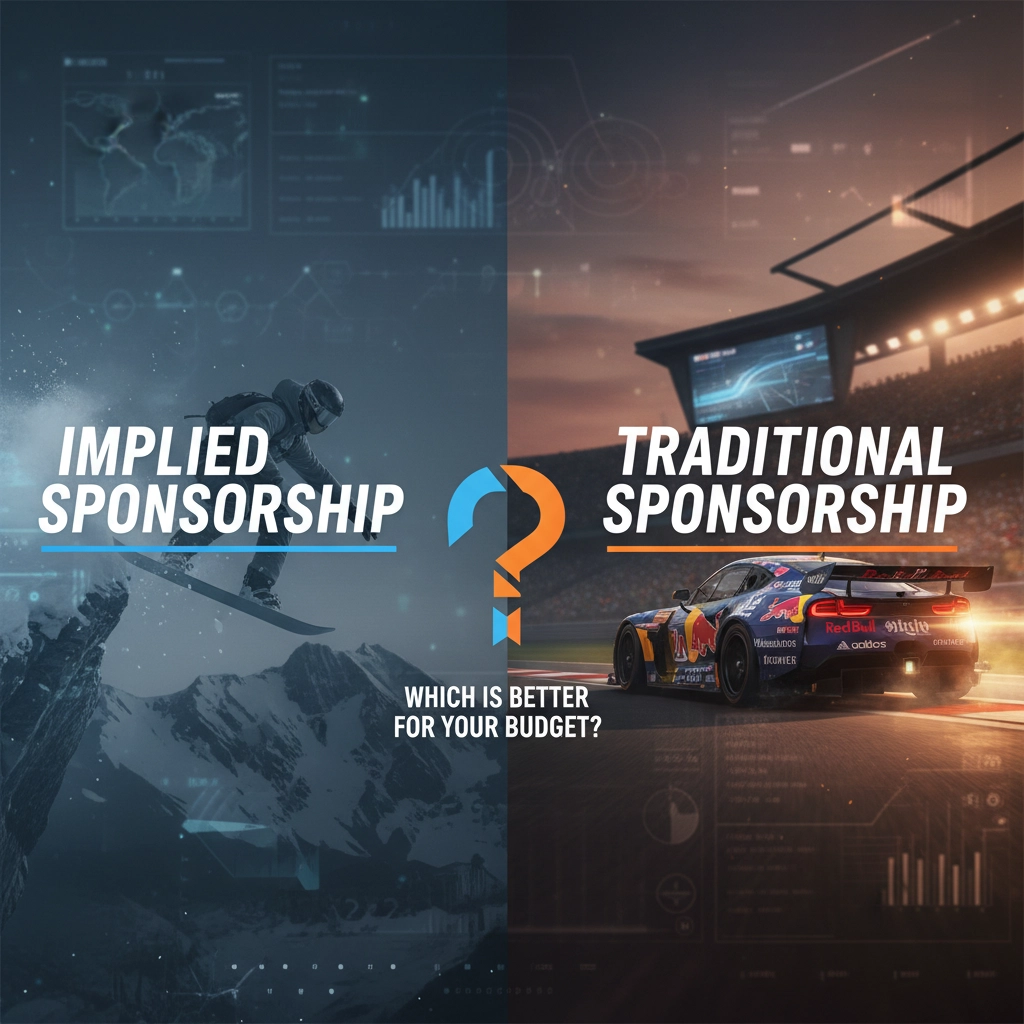
Sports marketing budgets are tighter than ever, and every dollar counts. You're probably asking yourself: should I go all-in on a traditional sponsorship deal, or can I get better bang for my buck with implied sponsorship tactics? The answer isn't as straightforward as you might think.
Let's break down both approaches so you can make the smartest decision for your brand's budget and goals.
What is Traditional Sports Sponsorship?
Traditional sports sponsorship is the classic approach we all know. You pay to officially associate your brand with an athlete, team, event, or venue. Think Nike's massive deals with LeBron James, or Coca-Cola's long-standing partnership with FIFA.
There are four main types of traditional sports sponsorships:
Athlete Sponsorship – You're paying an individual athlete to wear your logo, use your products, and appear in your marketing campaigns. These deals can range from a few thousand dollars for local athletes to hundreds of millions for superstars.
Team Sponsorship – Your brand gets prominent placement on uniforms, equipment, and team materials. Remember when Manchester United signed that $559 million deal with TeamViewer? That's team sponsorship on steroids.
Event Sponsorship – You're the official sponsor of a tournament, championship, or sporting event. Red Bull has mastered this with their extreme sports events, essentially creating their own sponsorship opportunities.
Venue Sponsorship – Think naming rights and permanent brand presence throughout stadiums and arenas. American Airlines has their name on arenas in Miami and Dallas, creating year-round brand exposure.

What is Implied Sponsorship?
Implied sponsorship is the art of creating brand association without officially paying for sponsorship rights. It's about being smart, creative, and strategic with your marketing dollars to create the perception of sponsorship or sports association.
This could include:
- Ambient advertising around sports venues during major events
- Social media campaigns that coincide with sporting events without officially sponsoring them
- Athlete partnerships that don't involve official sponsorship but create brand association
- Community engagement at sporting events through guerrilla marketing tactics
- Strategic product placement in sports-adjacent content
The key difference? You're not paying the premium for official sponsorship rights, but you're still creating meaningful connections with sports audiences.
The Budget Reality Check
Here's where things get interesting. Traditional sports sponsorships are expensive – really expensive. A 30-second Super Bowl ad costs over $7 million, and that's before production costs. Olympic sponsorships start in the hundreds of millions. Even local team sponsorships can run tens of thousands of dollars annually.
But expensive doesn't always mean effective. Research shows that many traditional sponsorships struggle with ROI measurement and audience engagement. When you're one of dozens of sponsors plastered around a stadium, your message can get lost in the noise.
Implied sponsorship tactics typically cost a fraction of traditional sponsorship deals. A well-executed social media campaign during March Madness might cost $50,000 and generate more meaningful engagement than a $500,000 traditional sponsorship that gets ignored by oversaturated fans.

When Traditional Sponsorship Makes Sense
Don't write off traditional sponsorship just yet. There are specific scenarios where it's absolutely the right choice:
Brand Awareness Goals – If you need massive, broad reach and your budget can handle it, traditional sponsorship delivers eyeballs like nothing else. Those Super Bowl commercials aren't expensive by accident.
B2B Marketing – When you're targeting other businesses, official sponsorship credentials can open doors that implied tactics can't. Being the "Official Technology Partner" of a major league carries weight in boardroom conversations.
Long-term Brand Building – Consistent, multi-year traditional sponsorships create deep brand associations. Think about how synonymous Rolex has become with golf or how Red Bull owns extreme sports.
Exclusive Market Access – Traditional sponsorships often come with exclusive category rights, blocking competitors from the same opportunities.
When Implied Sponsorship is Your Best Bet
Implied sponsorship tactics shine in different situations:
Limited Budgets – Obviously, if you can't afford traditional sponsorship rates, implied tactics let you play in the same sandbox for a fraction of the cost.
Niche Markets – When you're targeting specific demographics or interests, implied sponsorship allows for more targeted, personal approaches that can resonate better than broad traditional campaigns.
Agility and Speed – Implied tactics can be executed quickly to capitalize on trending moments or unexpected opportunities. Traditional sponsorships require months of planning and negotiation.
Creative Freedom – Without official sponsorship restrictions, you have more flexibility to create edgy, memorable campaigns that might not be approved through traditional channels.

ROI Comparison: The Numbers Don't Lie
Studies show that sports sponsorship ROI is typically measured using weighted media equivalency. Traditional sponsorships average around $3-5 return for every $1 spent, but this varies wildly based on execution and measurement methodology.
Implied sponsorship tactics, when executed well, often deliver higher ROI because:
- Lower upfront costs mean smaller investments needed to see returns
- More targeted approaches result in higher engagement rates
- Creative, memorable campaigns generate organic sharing and extended reach
- No premium paid for official rights means more budget available for actual marketing execution
However, implied sponsorship success is heavily dependent on creativity and execution quality. A poorly planned implied campaign can be a complete waste, while even mediocre traditional sponsorships typically deliver some baseline value.
The Hybrid Approach: Getting the Best of Both Worlds
Smart marketers don't always choose one or the other. Consider these hybrid strategies:
Micro-Sponsorships Plus Amplification – Sponsor smaller, local events traditionally, then use implied tactics to amplify the association across larger sporting events.
Athlete Partnerships – Work with athletes outside of their official team sponsorships, creating authentic content that benefits both parties without massive traditional sponsorship costs.
Community Activation – Combine small traditional sponsorships of local teams with broader implied campaigns that connect to major sporting events.
Making Your Decision: Key Questions to Ask
Before choosing your approach, honestly answer these questions:
-
What's your actual budget? Don't stretch for traditional sponsorship if it means sacrificing execution quality.
-
What are your goals? Brand awareness, lead generation, and community engagement might require different approaches.
-
Who's your target audience? B2B audiences often respond differently than B2C consumers.
-
What's your timeline? Traditional sponsorships require long-term commitment and planning.
-
How will you measure success? Make sure your measurement approach aligns with your chosen strategy.

The Future of Sports Marketing
The sports marketing landscape is evolving rapidly. Digital platforms are creating new opportunities for implied sponsorship tactics, while traditional sponsorship costs continue to rise. Smart brands are finding success with data-driven approaches that combine traditional and implied tactics based on specific campaign goals and audience insights.
At Sports Media Inc., we've seen firsthand how brands succeed with both approaches. The key isn't choosing the "right" strategy universally – it's choosing the right strategy for your specific situation, budget, and goals.
Your Next Move
Whether you choose traditional sponsorship, implied tactics, or a hybrid approach, success comes down to execution, measurement, and continuous optimization. Start with your budget reality, define clear goals, and choose tactics that align with both.
The sports marketing game is getting more competitive every year, but that also means more opportunities for creative, budget-conscious brands to make their mark. The question isn't whether traditional or implied sponsorship is better – it's which approach will deliver the results your brand needs right now.
Ready to develop a sports marketing strategy that maximizes your budget? Check out our services to see how we can help you choose and execute the right approach for your brand's unique situation.