
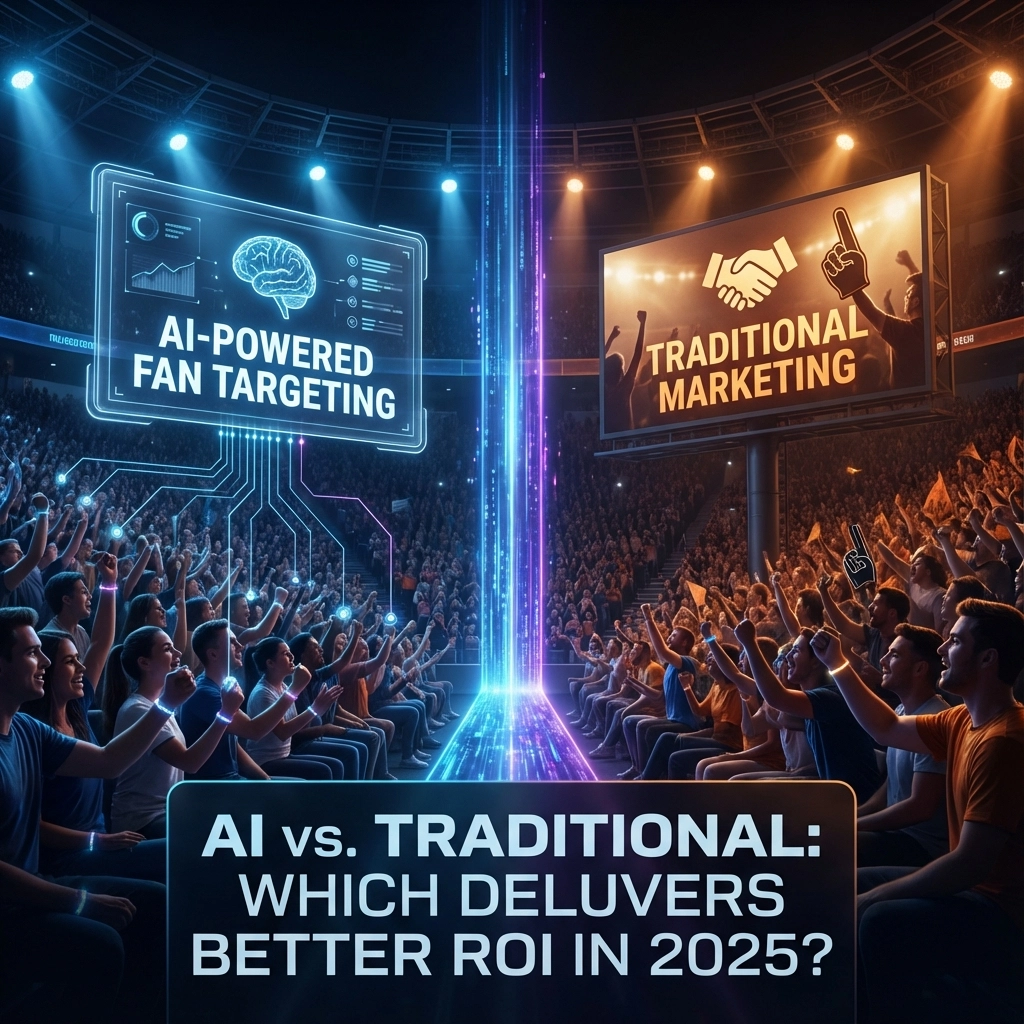
The sports marketing landscape just experienced its biggest shake-up since the invention of television. While traditional sports marketing relies on broad demographics and gut feelings, AI-powered fan targeting delivers measurable, real-time results that traditional methods simply can't match.
The numbers don't lie. AI-driven campaigns are delivering superior ROI across every major sports property, and the gap is widening fast. Here's what the data reveals about why smart sports marketers are making the switch – and what it means for your bottom line.
The Real-Time ROI Revolution
Traditional sports marketing operates on a frustrating timeline. You launch a campaign, cross your fingers, and wait until the season ends to see if it worked. By then, it's too late to make adjustments.
AI flips this entire model on its head. Instead of waiting months for results, AI systems provide real-time ROI measurement that lets you optimize campaigns while they're running. When a particular message resonates with fans during halftime, you can double down immediately. When something falls flat, you pivot before wasting another dollar.
This speed advantage is game-changing. Where human analysis once took weeks or months, AI systems process vast data sets in seconds, turning consumer trends into immediately actionable insights. Major leagues are already capitalizing on this – the Premier League, NBA, and Formula 1 have partnered with Microsoft, AWS, and Salesforce respectively to implement AI-driven engagement strategies.

Precision Targeting That Actually Works
Traditional sports marketing casts wide nets. You buy billboard space hoping the right fans see it. You sponsor stadium announcements knowing most people aren't paying attention. You target "males 18-54 who like football" and hope for the best.
AI targeting is surgical by comparison. Instead of broad demographic buckets, AI analyzes engagement patterns, purchasing behavior, browsing habits, and real-time location data to identify micro-segments with actual buying intent.
Consider this scenario: Traditional marketing might target all fans attending a game with the same beer promotion. AI targeting identifies that Maria, who regularly purchases team apparel and checks in at sports bars, receives a personalized 20% merchandise discount notification when she enters the stadium – coordinated perfectly with the beer sponsor's messaging. The result? Higher engagement rates and measurable revenue impact.
This precision extends beyond individual targeting. AI can predict which fan segments are most likely to respond to specific sponsor messages, optimal timing for promotional pushes, and even which concession stands will see the highest traffic based on game flow and weather conditions.
The Cost Efficiency Game-Changer
Traditional sports marketing often feels like playing roulette with your budget. You allocate funds across different channels – radio spots, print ads, stadium signage – and hope something sticks. The waste is enormous.
AI-powered campaigns eliminate this guesswork through dynamic budget allocation. Machine learning algorithms continuously analyze performance across all channels and automatically shift spending to the highest-performing tactics. If social media ads are converting at 3x the rate of traditional display ads, AI reallocates budget accordingly – in real time.

The scalability advantages are equally impressive. Traditional campaigns require manual adjustments for different markets, venues, and audience segments. AI campaigns scale automatically, customizing creative, messaging, and timing for each unique context while maintaining consistent brand standards.
Industry Adoption Signals Market Confidence
The sports industry's embrace of AI isn't speculative – it's based on proven results. Major properties aren't just experimenting anymore; they're making AI a core part of their marketing strategy.
Formula 1's partnership with AWS uses machine learning to enhance fan experiences while providing sponsors with granular engagement data. The NBA's partnership with Microsoft leverages AI for personalized content delivery and sponsor integration. These aren't publicity stunts; they're strategic investments based on measurable ROI improvements.
The sponsorship market reflects this confidence. 39% of CMOs plan to increase sports sponsorship investments in 2025, largely driven by AI's ability to provide transparent, real-time ROI metrics that justify spending decisions.
Data-Driven Creative That Resonates
Traditional sports marketing relies heavily on creative intuition. Agencies develop campaigns based on experience and focus groups, then hope they resonate with fans. Sometimes they hit, often they miss.
AI transforms creative development from art to science. Machine learning analyzes which visual elements, messaging angles, and emotional triggers drive the strongest response from specific fan segments. Instead of guessing what will work, you know what will work before launching.

This data-driven approach extends to content timing and placement. AI identifies when specific fan segments are most active on different platforms, which types of content generate the highest engagement during different parts of the sports calendar, and how to sequence messages for maximum impact.
Personalization at Scale
The holy grail of marketing has always been treating each customer as an individual while maintaining operational efficiency. Traditional sports marketing could never achieve this balance – personalization was either too expensive or too time-consuming to implement at scale.
AI makes personalization economically viable for sports properties of all sizes. Whether you're marketing to 50,000 season ticket holders or 5 million social media followers, AI can deliver individually tailored experiences that feel personal while operating automatically.
This personalization goes beyond just inserting names into emails. AI creates unique content experiences, customized sponsor integrations, and personalized promotional offers based on individual fan behavior patterns and preferences.
Measuring What Actually Matters
Traditional sports marketing often relies on vanity metrics – impressions, reach, brand awareness lift. These metrics feel good but don't directly correlate to revenue impact.
AI-powered campaigns focus on outcome-based metrics that tie directly to business results. Instead of measuring how many people saw your ad, you measure how many took action. Instead of tracking brand awareness, you track actual purchase behavior. Instead of hoping sponsors renew, you provide concrete data on customer acquisition and revenue attribution.
This measurement precision helps sports properties justify premium pricing for sponsorship packages while giving sponsors confidence in their investment decisions.
The Competitive Reality Check
Here's the uncomfortable truth: if you're still relying primarily on traditional sports marketing approaches, you're already behind. Your competitors who've embraced AI targeting aren't just getting better results – they're operating with fundamentally different capabilities.
While you're planning next quarter's campaign based on last year's performance, they're optimizing this week's messaging based on yesterday's game results. While you're allocating budgets based on historical data, they're shifting resources to capitalize on real-time trends.
The gap will only widen as AI systems become more sophisticated and traditional marketing approaches remain static.
Making the Transition
The good news? Transitioning to AI-powered fan targeting doesn't require completely scrapping your existing marketing infrastructure. The best approach combines AI capabilities with proven traditional tactics, using technology to amplify what's already working while eliminating what isn't.
Start by implementing AI-driven audience analysis to better understand your current fan segments. Use machine learning to optimize your existing campaign performance before launching entirely new AI-powered initiatives. This gradual approach reduces risk while building internal confidence in AI's capabilities.
The sports marketing industry reached a tipping point in 2025. AI-powered fan targeting isn't just delivering better ROI than traditional approaches – it's redefining what's possible in sports marketing entirely. Organizations that embrace this shift will dominate their markets. Those that don't will struggle to compete on relevance, efficiency, and results.
The question isn't whether AI will transform sports marketing. It already has. The question is whether you'll be part of that transformation or left behind by it.