
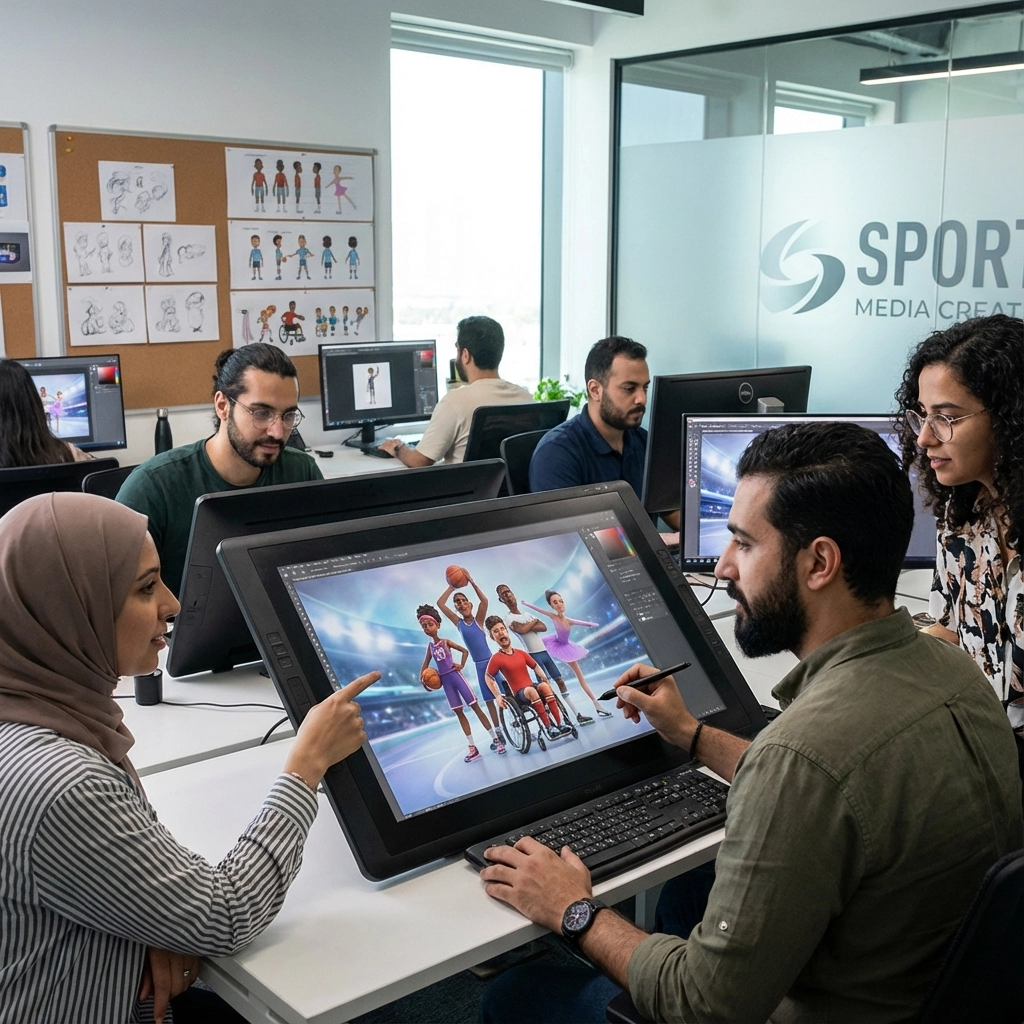
Creating cartoon characters that represent the full spectrum of sports while celebrating diversity isn't just about drawing cool athletes – it's about building authentic connections between young fans and the sports they love. At Sports Media Inc., our upcoming Games.sportsmedia.Us Sports Media Cartoon Sports Character Series is breaking new ground by developing 10 unique cartoon sports characters that reflect the real diversity of athletic excellence across traditional and extreme sports.
Starting With Purpose, Not Just Pencils
Every great character starts with a story, not a sketch. Before our artists even pick up their digital pens, we dive deep into research that goes way beyond watching highlight reels. We're talking about understanding the cultural roots of different sports, the communities that shaped them, and the athletes who continue to push boundaries.
Take skateboarding, for example. Our character isn't just a generic kid on a board. We researched the sport's origins in surf culture, its evolution through urban communities, and how it's become a global phenomenon that transcends traditional athletic boundaries. This foundation ensures our skateboard character feels authentic to anyone who's ever pushed themselves down a halfpipe or learned their first kickflip.

The same approach applies whether we're designing a soccer player who might represent the sport's global appeal or a hockey character that captures the intensity and teamwork that defines the game. Each character needs to feel like they could step off the page and onto the field, court, or mountain.
Diversity That Goes Beyond Surface Level
Real diversity in character design means thinking beyond just changing skin color or adding different hairstyles. It's about representing different body types that actually exist in sports, different abilities, different cultural approaches to athletics, and different reasons why people fall in love with their chosen sport.
Our basketball character might be shorter than expected, challenging stereotypes while showing kids that heart and skill matter more than height. Our tennis player could be using adaptive equipment, demonstrating that excellence comes in many forms. Our BMX rider might represent a community where that sport is deeply embedded in local culture and identity.
We work with consultants from different communities and sports backgrounds to ensure our characters feel genuine. This isn't about checking boxes – it's about creating characters that make kids from all backgrounds see themselves as potential athletes and champions.
The Technical Magic Behind Character Creation
Once we have our character concepts locked down, the real creative work begins. Our design process follows a structured approach that balances artistic vision with educational goals.
Silhouette Design
Every character needs to be instantly recognizable, even in shadow. Our football character's silhouette immediately communicates power and protection through broad shoulders and a sturdy stance. Our parkour character's silhouette suggests fluid movement and agility. These visual shortcuts help young readers quickly identify with their favorite sports and characters.

Shape Language
We use specific shapes to communicate personality traits. Curved lines suggest friendliness and approachability – perfect for our soccer character who embodies teamwork. Angular shapes communicate strength and determination, which works great for our hockey character who needs to project toughness and precision.
Color Psychology
Colors aren't random choices. Our snowboarding character uses cool blues and whites that connect to their mountain environment while suggesting calm confidence. Our surfing character incorporates ocean-inspired teals and sandy yellows that feel natural and energizing. Each palette supports both the character's personality and their sport's cultural context.
Sport-Specific Design Challenges
Different sports require different design considerations, and we've learned to embrace these challenges as opportunities for creativity.
Traditional Sports Characters
Sports like football, baseball, and basketball have deep cultural significance and existing visual languages. Our challenge is honoring these traditions while bringing fresh perspective. Our baseball character might wear classic stirrups but with modern styling that feels current. Our football character embodies the sport's strategic thinking, not just its physical demands.
Extreme Sports Characters
Skateboarding, BMX, parkour, and snowboarding offer more flexibility in character design because these sports celebrate individual expression. Our extreme sports characters can be more experimental in their look while staying true to their sport's culture of creativity and risk-taking.

Each character needs to work across multiple mediums too. They'll appear in comic books, animated videos, interactive games, and eventually merchandise. That means designs need to be simple enough to reproduce clearly but detailed enough to feel distinctive and memorable.
Technology Meets Artistry
Our character development pipeline leverages both traditional artistic skills and cutting-edge technology. We start with hand-drawn concept sketches because there's no substitute for the human touch in developing personality and emotion. But we quickly move to digital tools that allow rapid iteration and testing.
We use 3D modeling to ensure characters look consistent from every angle – crucial when they'll eventually appear in animated content and games. Our artists work in layers that can be easily modified, allowing us to test different costume variations, expressions, and poses without starting from scratch.
Color testing happens digitally too, letting us see how characters look under different lighting conditions and against various backgrounds. Since these characters will appear in educational games and interactive content, we need to ensure they remain visually clear and appealing across different screen sizes and resolutions.
Building Characters That Teach
Unlike entertainment-only characters, our sports heroes need to be effective teachers. Each character embodies specific lessons about their sport – not just rules, but values like perseverance, teamwork, strategic thinking, and respect for opponents.
Our tennis character demonstrates focus and individual determination. Our soccer character shows how individual skill serves team success. Our parkour character embodies creative problem-solving and calculated risk-taking. These personality traits aren't just interesting character details – they're the foundation for educational content that helps young athletes develop both skills and character.

Looking Ahead: From Static to Dynamic
While we're launching with comic books and static digital content, these characters are designed for motion. Every design choice considers how characters will look in animation, how they'll move during action sequences, and how they'll interact with each other in team-based content.
Our animation pipeline is already in development, with character rigging that maintains the personality and appeal of our original designs while allowing for dynamic sports action. Whether it's our snowboarding character carving down a mountain or our basketball character driving to the hoop, the animated versions need to feel like natural extensions of the characters kids first meet in our comics.
The diversity we're building into these characters isn't just about representation – it's about expanding every young person's vision of what's possible in sports. When kids see characters who look like them, come from similar backgrounds, or face comparable challenges, they don't just enjoy the entertainment. They start to see themselves as athletes, competitors, and champions.
Our character creation process is ultimately about building bridges between the incredible diversity of real athletic achievement and the imaginations of young fans who might become tomorrow's sports heroes. Every design choice, every color selection, and every personality trait serves that larger mission of inspiring the next generation to get active, get involved, and discover their own potential through sports.