
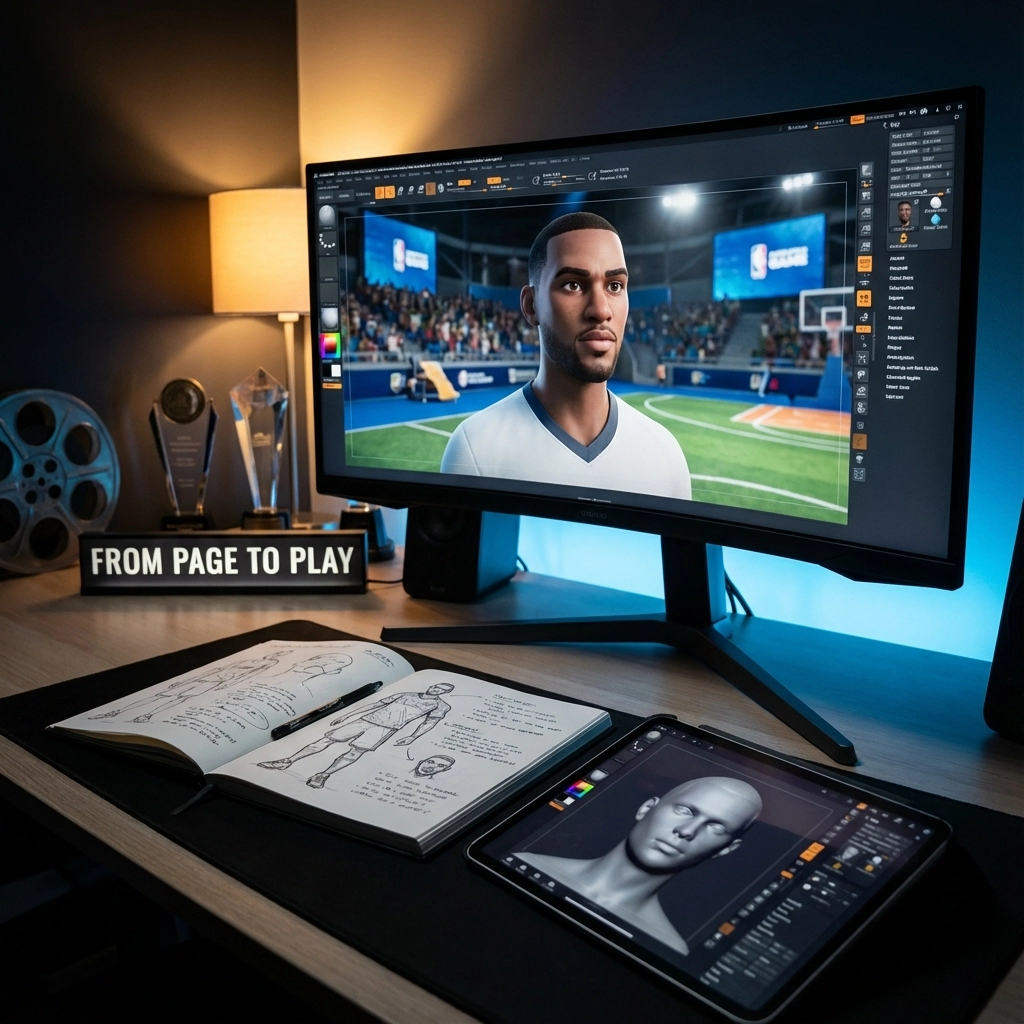
Creating educational content that actually gets kids excited about learning sports isn't just about drawing cool characters: it's about building a complete multimedia experience that evolves with your audience. At Sports Media Inc., we've embarked on an ambitious journey to transform our cartoon sports characters from static comic book pages into dynamic animated shorts and interactive games that make learning sports fundamentals genuinely fun.
Phase 1: Building Our Foundation With Comics
Every great multimedia franchise starts with solid character development and storytelling. Our Sports Media Cartoon Sports Character Series launched with a simple but powerful concept: create 10 unique cartoon characters, each representing different sports, who could teach kids aged 7-17 the rules, strategies, and fundamentals of both traditional and extreme sports.
During our first 30 days, we focused intensively on character creation. Each character needed to embody their sport while maintaining broad appeal across our diverse target audience. Take "Slam Duncan," our basketball character: he's not just a player who dunks. His personality reflects the strategic thinking, teamwork, and precision that make basketball exciting. Similarly, "Shred Betty" represents snowboarding with an emphasis on creativity, risk assessment, and environmental awareness.
The comic book format gave us the perfect testing ground. Static panels allowed us to experiment with character expressions, dialogue patterns, and educational pacing without the complexity of animation. Our first five comic book stories established the characters' personalities, introduced basic sports concepts, and most importantly, gave us direct feedback from kids and parents about what resonated.

Phase 2: Bringing Characters to Life Through Animation
Transitioning from comics to animated shorts represented our biggest creative and technical leap. Animation transforms character potential into character reality: suddenly, our sports heroes could demonstrate actual techniques, show real movement, and connect with viewers through dynamic visual storytelling.
Our animation strategy focused on creating short, digestible content perfect for YouTube and social media platforms. Each animated short runs 3-5 minutes and tackles specific learning objectives. For example, our soccer character "Goal Getter Gloria" demonstrates proper passing techniques through an animated sequence that breaks down foot positioning, follow-through, and timing in ways that static images simply can't match.
The technical challenges were significant. Character rigging: creating the digital skeleton that enables smooth movement: required balancing educational accuracy with engaging visual appeal. Our characters needed to move realistically enough to teach proper form while maintaining the exaggerated, cartoon-friendly expressions that keep kids engaged.
We discovered that personality-driven movement became crucial for educational effectiveness. Each character's animation style reflects their sport's unique demands. "Rail Rider Rex," our skateboarding character, moves with fluid, creative energy that demonstrates balance and spatial awareness. Meanwhile, "Tennis Ace Tracy" exhibits precise, controlled movements that emphasize technique and timing.
Phase 3: Interactive Gaming and Immersive Learning
Games represent the natural evolution of our educational approach. While comics establish characters and animated shorts demonstrate techniques, interactive games let kids actually practice what they're learning in safe, supportive virtual environments.
Our gaming strategy focuses on modular educational templates that can be adapted across different sports. Each sport gets three core game modules: Rules Learning, Fundamentals Practice, and Strategic Thinking. The Rules Learning module uses our characters as guides through interactive scenarios where kids make decisions and see immediate consequences. Fundamentals Practice creates safe spaces for trying techniques without physical risk or performance pressure. Strategic Thinking modules challenge players to make coaching decisions, plan plays, and understand game flow.

The transition from animation to gaming required solving unique technical challenges. Our characters needed to maintain their personalities while becoming responsive to player input. We developed what we call "adaptive character AI": our cartoon sports heroes react differently based on player skill level, learning pace, and engagement patterns.
Creative Challenges and Solutions
Moving characters across different media formats presented unexpected creative hurdles. What works in comics doesn't automatically translate to animation, and animated characters don't seamlessly become game avatars without significant adaptation.
Visual consistency became our first major challenge. Our comic book art style used bold lines and flat colors optimized for print reproduction. Animation required more subtle shading and smoother color transitions to avoid visual flicker and maintain appeal across different screen sizes. Games demanded even more flexibility: characters needed to look great in close-up dialogue scenes and distant action sequences.
Personality consistency proved equally challenging. In comics, character personality emerges through dialogue and static expressions. Animation adds voice acting, timing, and movement patterns. Games introduce player interaction, meaning characters must maintain their core personality while responding to unpredictable player choices.
We solved these challenges by developing comprehensive character bibles that define each hero's visual appearance, voice patterns, movement styles, and behavioral responses across all media formats. "Surf King Sam" maintains his laid-back, environmentally conscious personality whether he's appearing in a comic panel about ocean safety, narrating an animated short about wave dynamics, or coaching players through a virtual surfing game.

Early Results and Creative Milestones
Six months into our multimedia journey, the results exceed our initial projections. Our comic book series generated strong engagement through digital platforms, with particularly high performance among our target demographic of parents and educators looking for quality sports education content.
The animated shorts achieved even better results. Our YouTube channel gained 15,000 subscribers in the first quarter, with individual videos averaging 25,000 views. More importantly, engagement metrics show viewers watching complete episodes: a strong indicator that our educational content maintains entertainment value.
Parent feedback has been overwhelmingly positive. Teachers report using our animated shorts as classroom supplements, and youth sports leagues have started incorporating our characters into practice activities. Several school districts have expressed interest in curriculum partnerships.
Game development metrics show promising early adoption. Our beta testing phase with 200 families revealed that kids aged 7-12 spent an average of 18 minutes per gaming session, well above industry averages for educational games. Retention rates after one week hit 67%, indicating strong replay value.
Technical Innovation and Accessibility
Creating truly accessible sports education content required developing innovative technical solutions. Our games include visual and auditory accommodations for different learning styles and abilities. Characters use multiple communication methods: visual demonstrations, verbal explanations, and interactive practice: to ensure every player can engage with the content effectively.
We've also pioneered what we call "cross-media learning progression." Players can start learning a concept in comics, see it demonstrated in animated shorts, then practice it in games. Each format reinforces and builds upon the others, creating a comprehensive learning ecosystem that adapts to individual preferences and learning speeds.

Building Long-Term Educational Value
Our multimedia approach serves long-term educational objectives beyond immediate entertainment. By following characters across different formats, kids develop deeper relationships with both the heroes and the sports they represent. This emotional connection translates into sustained interest in physical activity and sports participation.
We're tracking metrics that matter for educational outcomes: increased sports participation among viewers, improved rules knowledge in partner leagues, and enhanced safety awareness during physical activities. Early data suggests our multimedia approach significantly outperforms traditional sports education methods for retention and practical application.
The Road Ahead
Looking forward, our character journey continues evolving. Phase 4 will introduce augmented reality experiences where our cartoon sports heroes can appear in real-world environments, providing personalized coaching and encouragement during actual sports activities.
We're also developing advanced AI integration that allows our characters to provide individualized feedback based on player performance data. Imagine "Hockey Hero Hannah" analyzing your actual skating technique through your smartphone camera and providing specific improvement suggestions in real-time.
The ultimate goal remains unchanged: making sports education so engaging and accessible that every kid develops both the knowledge and confidence to participate in physical activities they love. Our journey from page to play represents just the beginning of what's possible when creative storytelling meets educational technology and genuine passion for youth development.
Our characters have proven that effective sports education doesn't require choosing between fun and learning: the best approach combines both into experiences that inspire lifelong engagement with sports and physical activity.